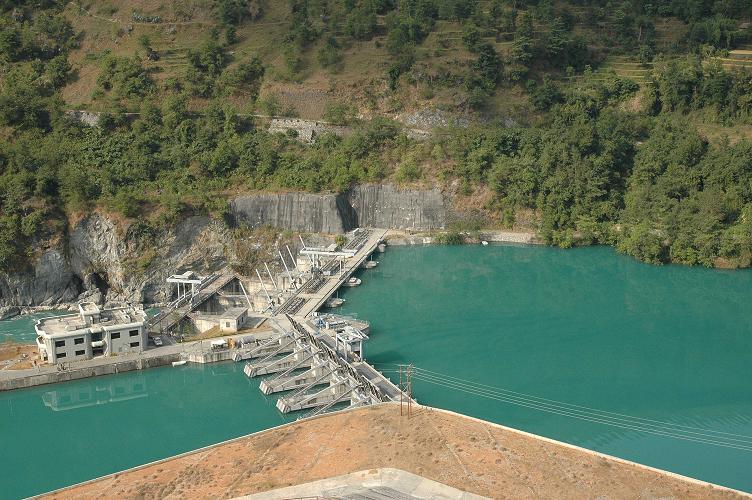
Nepal’s hydropower sector is in the middle of a BOOT boom. Billions of rupees of private capital are flowing into run-of-river projects under Build-Own-Operate-Transfer (BOOT) structures, anchored by Power Purchase Agreements (PPAs) signed with the Nepal Electricity Authority (NEA). These projects will sit on balance sheets for decades. They will be audited annually. They will raise public equity from retail investors on NEPSE.
And a significant number of them are being accounted for under the wrong standard.
The instrument governing their recognition is not IAS 16 Property, Plant and Equipment. It is IFRIC 12 Service Concession Arrangements. The distinction is not cosmetic. It changes the nature of the asset on the balance sheet, the pattern of revenue recognition, and the timing of profit – with downstream consequences for tax, dividends, and investor perception.
This piece uses the Power Purchase Agreement between the NEA and Tamakoshi Jalvidyut Company Limited (TKJVC) for the Tamakoshi-V Hydropower Project – a 99.8 MW run-of-river project in Dolakha district, signed 14th Mangsir 2079 – as its central case. The argument is simple: under any rigorous application of IFRIC 12, this project, and most take-or-pay PPAs structured similarly in Nepal, must be recognised as a financial asset. Not intangible. Not property, plant and equipment.
What IFRIC 12 Actually Says
IFRIC 12 applies to public-to-private service concession arrangements. Paragraph 5 sets out the two-part scope test. For the standard to apply:
(a) the grantor controls or regulates what services the operator must provide with the infrastructure, to whom it must provide them, and at what price; and
(b) the grantor controls – through ownership, beneficial entitlement or otherwise – any significant residual interest in the infrastructure at the end of the term of the arrangement.
Paragraph 6 goes further. Infrastructure used for its entire useful life – so-called “whole of life assets” – falls within scope if condition (a) alone is met. The residual interest test under (b) is effectively waived for such assets.
Where both conditions are satisfied, Paragraph 11 is unambiguous: the infrastructure “shall not be recognised as property, plant and equipment of the operator.” The operator does not own the asset. It has access to operate the infrastructure to provide a public service on behalf of the grantor.
On the nature of the consideration, Paragraph 16 draws the critical distinction:
“The operator shall recognise a financial asset to the extent that it has an unconditional contractual right to receive cash or another financial asset from or at the direction of the grantor for the construction services; the grantor has little, if any, discretion to avoid payment.”
Paragraph 17 covers the alternative:
“The operator shall recognise an intangible asset to the extent that it receives a right (a licence) to charge users of the public service. A right to charge users of the public service is not an unconditional right to receive cash because the amounts are contingent on the extent that the public uses the service.”
The entire analysis hinges on one question: who bears the demand risk?
The Tamakoshi-V PPA Under the Microscope
Condition (a) – Price and Service Control (IFRIC 12, Para 5(a), AG2, AG3):
Article 12.1 of the PPA locks in fixed purchase rates per kilowatt-hour, with a scheduled 3% annual escalation commencing one year after the Commercial Operation Date. The NEA does not negotiate price in the open market. The price is fixed by the contract itself. Application Guidance Paragraph AG3 is explicit: “the grantor does not need to have complete control of the price: it is sufficient for the price to be regulated by the grantor, contract or regulator.”
Article 5.2 of the PPA prohibits the Company from selling or handing over the electricity it produces to any third party without prior NEA approval. The Company has no right to seek a better tariff elsewhere, no legal capacity to redirect output to alternative buyers. Application Guidance Paragraph AG2 confirms: “The control or regulation referred to in condition (a)…includes circumstances in which the grantor buys all of the output.” Condition (a) is met without qualification.
Condition (b) – Residual Interest (IFRIC 12, Para 5(b), AG4):
Article 2.1 of the PPA provides that the agreement runs for 30 years from the Commercial Operation Date, or until the generation license expires, whichever is shorter. Under Nepal’s Electricity Act, private hydropower projects built under BOOT generation licenses are subject to mandatory transfer to the Government of Nepal at the end of the concession period. The handover obligation sits in the Generation License and Law rather than the PPA – but its legal existence is not in dispute. Application Guidance Paragraph AG4 requires that the grantor’s residual interest “restrict the operator’s practical ability to sell or pledge the infrastructure.” A developer cannot sell, pledge, or redirect the project. The state’s residual claim is controlling. Condition (b) is met.
The Financial Asset Case – Paragraph 16:
Article 5.1(क) of the PPA requires the NEA to purchase energy from the Company every month up to the Contract Energy limit, based on the Company’s Availability Declaration. Article 10.1 establishes the take-or-pay guarantee: if the NEA fails to take the available energy due to a Forced Outage of its transmission lines, or issues a Dispatch Instruction ordering reduced generation, the NEA is contractually bound to pay compensation. Schedule 3 of the PPA specifies the formula: Compensation Amount (Rs.) = Undelivered Energy × Purchase Price.
The Company does not earn revenue by waiting for consumers to buy electricity downstream. It earns it by making the plant available. The NEA’s obligation to pay is triggered by availability, not by public consumption. This is precisely the structure Paragraph 16 describes. And importantly, Paragraph 16 itself clarifies that an unconditional right to cash survives even if “payment is contingent on the operator ensuring that the infrastructure meets specified quality or efficiency requirements.” Performance conditions – such as the PPA’s minimum dry season generation requirement or the 72-hour outage tolerance in Schedule 3 – do not displace the financial asset characterisation. They are quality thresholds, not demand contingencies.
The Tamakoshi-V project must be recognised as a financial asset.
The Loophole Arguments – And Why They Fail
Several arguments circulate in Nepal’s accounting community to justify IAS 16 treatment. Each deserves to be examined seriously – and each fails on close reading.
Argument 1: “The PPA is just a sales contract, not a concession.”
The argument holds that the NEA is simply a buyer of electricity. The PPA is a commercial offtake agreement. The Company sells a commodity.
Application Guidance Paragraph AG2 rejects this directly: the control condition “includes circumstances in which the grantor buys all of the output.” The substance of the PPA extends far beyond an arm’s-length sale. Article 4.1 binds the Company to design, construct, test, and commission the project in coordination with the NEA, with mandatory progress reporting and construction schedules. Article 5.2 eliminates any commercial freedom to sell elsewhere. Per Paragraph 12 of IFRIC 12, “the operator acts as a service provider.” Calling this a sales contract is a description of form, not substance.
Argument 2: “The Company builds the asset for itself, not for the grantor.”
The argument: the developer raises equity, takes on debt, bears construction risk, hires the EPC contractor, and suffers cost overruns. This looks like owner-operator economics.
IFRIC 12 was specifically designed for exactly this structure. Its Background section notes that governments introduce these arrangements precisely “to attract private sector participation in the development, financing, operation and maintenance of such infrastructure.” The fact that a developer finances and constructs the plant is a feature of the concession model, not an exemption from it. Paragraph 11 is unambiguous: the arrangement does not convey “the right to control the use of the public service infrastructure to the operator.” Application Guidance Paragraph AG5 draws the decisive line: “Control should be distinguished from management. If the grantor retains both the degree of control described in paragraph 5(a) and any significant residual interest in the infrastructure, the operator is only managing the infrastructure on the grantor’s behalf – even though, in many cases, it may have wide managerial discretion.” Wide managerial discretion is not ownership. It never has been.
Argument 3: “The operator enjoys the entire economic life – so there is no residual interest and Paragraph 5(b) fails.”
If the 30-year PPA exhausts the plant’s economic life, the argument goes, condition (b) cannot be satisfied and IFRIC 12 does not apply.
Paragraph 6 closes this escape route directly. Whole-of-life assets fall within scope if Paragraph 5(a) alone is satisfied. The standard explicitly anticipates arrangements where the grantor controls no economically meaningful residual interest at expiry, and imposes scope inclusion regardless. Since condition (a) is clearly met in this PPA, Paragraph 6 brings the project within scope irrespective of what remains at handover.
Argument 4: “The dam’s physical life far exceeds the PPA term – the company retains residual economic interest.”
This is the most technically sophisticated of the available arguments. A concrete dam may have a physical life of 50 to 100 years. The PPA runs 30. Therefore, the argument proceeds, the company holds residual value in the asset beyond the concession term, and Paragraph 5(b) fails.
The answer lies again in Application Guidance Paragraph AG4. The grantor’s control of residual interest must “restrict the operator’s practical ability to sell or pledge the infrastructure and give the grantor a continuing right of use throughout the period of the arrangement.” A developer cannot sell or pledge the dam. It cannot redirect the power to a different buyer under Article 5.2. The generation license is issued by the state and expires or transfers per state terms. In substance, the operator holds no freely exercisable residual right. The physical durability of concrete does not translate into an unencumbered economic interest capable of being realised independently of the state. The argument addresses form; Paragraph AG4 tests substance.
When Does the Intangible Asset Model Actually Apply – And Is BPC Getting It Right?
The intangible asset model under Paragraph 17 is appropriate when the operator receives a right – a licence – to charge users of the public service directly, and where revenue is genuinely contingent on the extent to which the public uses the service. The demand risk must sit with the operator, not the grantor.
Butwal Power Company (BPC) provides the nearest available Nepali example. BPC accounts for its Andhikhola (9.4 MW) and Jhimruk (12 MW) hydropower plants – held under service concession arrangements from the Government of Nepal – as intangible assets. The principal justification is that BPC operates its own distribution network, supplying electricity directly to retail, industrial, and other consumers across Syangja, Palpa, Pyuthan, and Arghakhanchi districts. Because BPC’s revenue is at least partially contingent on how much local consumers actually consume – rather than on a guaranteed government payment – it bears a form of demand risk consistent with Paragraph 17.
The principle is defensible. The execution deserves scrutiny.
IFRIC 12 Paragraph 26 directs that the intangible asset be accounted for in accordance with IAS 38 Intangible Assets. IAS 38 Paragraph 97 requires that the amortisation method “reflect the pattern in which the asset’s future economic benefits are expected to be consumed by the entity.” For a run-of-river hydro concession, economic benefits are consumed as electricity is generated and sold. The pattern of consumption is inherently usage-based – shaped by hydrology, seasonal flows, and dispatch – not uniform across calendar time. If BPC applies a straight-line amortisation methodology without reference to the actual consumption pattern of economic benefits, that choice requires justification against IAS 38 Paragraph 97. The question is not merely how many years remain in the concession, but whether the amortisation charge in a given dry season, when generation is a fraction of wet-season output, properly reflects the economic benefits consumed in that period. This is not a cosmetic issue; it affects period-to-period comparability and the matching of costs to revenues.
The Take-and-Pay Counterfactual
The analysis does change under a different contractual structure. Under a true take-and-pay PPA, the NEA pays only for energy it actually dispatches and takes. There is no compensation for non-dispatch. There is no payment for availability. The Company’s revenue becomes genuinely contingent on the NEA’s dispatch decisions, which are themselves driven by system load and ultimately by public demand.
In that scenario, the unconditional right to cash described in Paragraph 16 does not exist. Paragraph 17 becomes applicable. The operator holds a licence to earn revenue contingent on system usage – the demand risk has shifted from grantor to operator – and the intangible asset model would be the correct treatment.
No standard Nepali PPA with the NEA currently operates on this basis.
Why the Incentive to Get It Wrong Persists
Under the IFRIC 12 Financial Asset Model, the project is treated as a financing arrangement from the outset. Construction services are recognised as revenue during the build phase, giving rise to a financial asset on the balance sheet. Once operational, cash receipts from the NEA are split between principal repayment of the financial asset and interest income – with interest income front-loaded in the early years of the concession. This creates significant accounting profit in precisely the years when actual cash flow is most constrained by debt servicing. Tax liabilities crystallise before cash supports them. Dividend obligations arise before cash flow permits them.
IAS 16, by contrast, produces a depreciation and revenue profile that is broadly intuitive and manageable. The incentive to classify incorrectly is therefore not merely about avoiding technical complexity. It is about avoiding financial consequences that correct classification would impose – consequences that ought to prompt engagement with tax treatment and dividend policy, not drive an accounting choice.
Closing
IFRIC 12 has been in force since 2008. Its application to guaranteed-payment, government-controlled infrastructure concessions is not ambiguous. The Tamakoshi-V PPA – with its fixed tariffs locked in Article 12.1, its take-or-pay compensation obligation in Article 10.1 and Schedule 3, its prohibition on third-party sales in Article 5.2, and its 30-year term tied to a state-mandated generation license – satisfies the conditions of Paragraph 5, Paragraph 6, and Paragraph 16 of IFRIC 12.
The asset is a financial asset. It has been one since the day the contract was signed.
Correct accounting does not diminish the value of a hydropower project. What it does require is that preparers, auditors, and boards resist the path of least resistance – and explain honestly to investors, lenders, and regulators exactly what sits on the balance sheet, and why.
References: IFRIC 12 Service Concession Arrangements (IASB, November 2006, including amendments through IFRS 16 January 2016); IAS 38 Intangible Assets; Power Purchase Agreement between Nepal Electricity Authority and Tamakoshi Jalvidyut Company Limited for Tamakoshi-V Hydropower Project (86.067 MW), dated 14th Mangsir 2079.