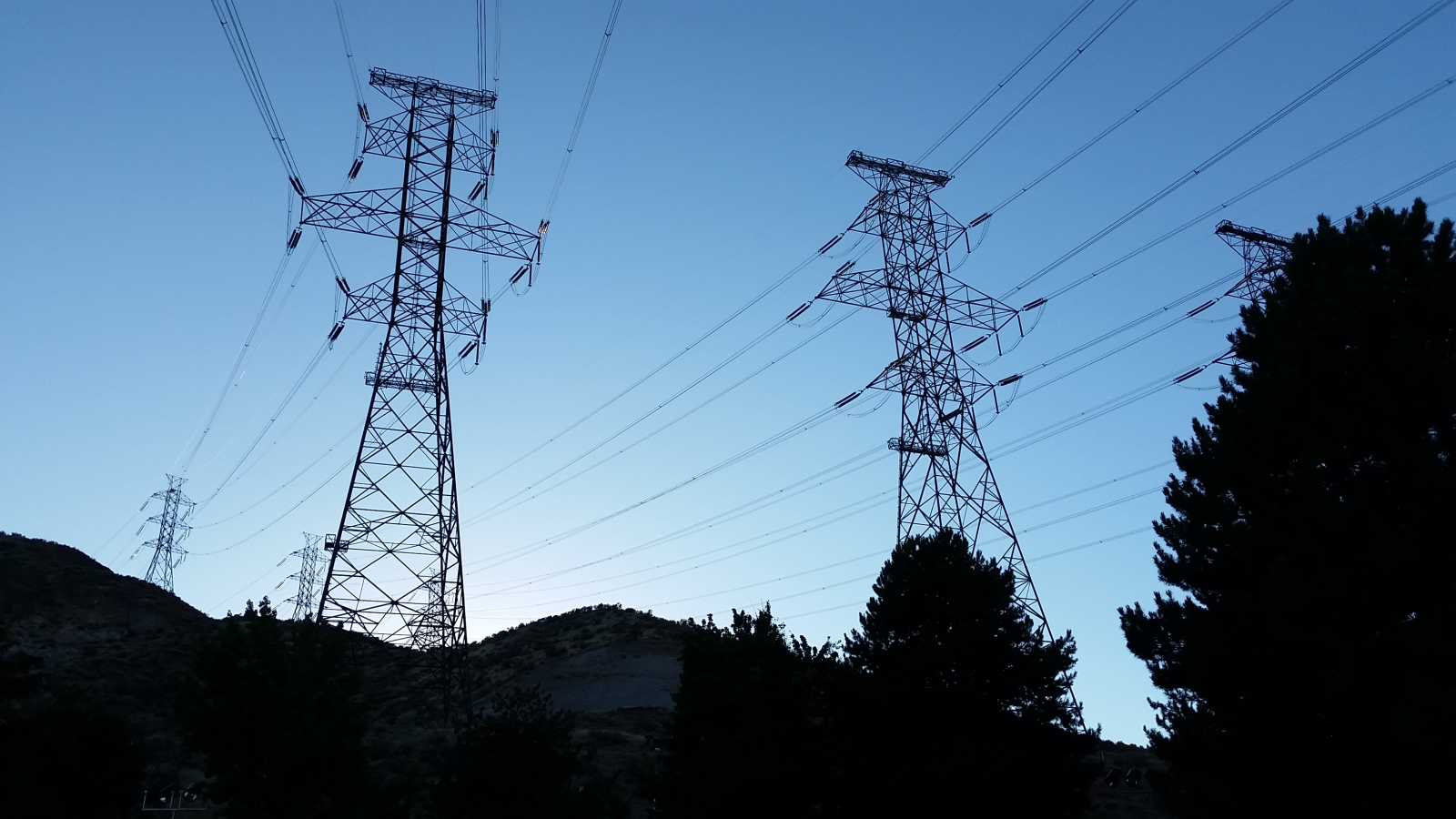
This is a post on how a private transmission line is structured, regulated, and financed in Nepal under a BOOT concession. It states the law and the financial logic as they stand, answers the questions a structuring team will actually ask, and marks honestly the points that remain unsettled. It is not tied to any one project.
A word on method. Much of what follows is settled — the plain content of statutes, rules, and established commercial practice — and is stated plainly, with citations. Some is not: Nepal’s PPP transmission framework is young, and no purely private transmission concession has yet reached financial close. Three conventions are used throughout. Where the law is settled, the text answers the question. Where the better view can be reasoned from principle and comparative practice but is not yet confirmed by Nepali authority, the text gives that view and says so. Where a question turns on an event that has not happened or a figure not yet published, it is marked as an OPEN QUESTION in a boxed note.
NOTE — A note on terminology — the “system operator”
The paying counterparty under a transmission service agreement (TSA) is the entity that needs the line’s capacity to run the grid. This document calls that party the system operator — the entity responsible for dispatch and grid balancing, which in Nepal today is NEA, the dominant grid owner and system operator. The term is preferred over “off-taker” (borrowed from the generation PPA) because a transmission line sells capacity and availability, not energy by the unit; and over a bare “grid owner” because the obligation to pay arises from the system-operation function, not from holding title to any particular asset. Where Nepal’s grid unbundles further, the TSA counterparty tracks the system-operator function, not whoever happens to own an adjacent asset.
Part I — The Transmission Imperative in Nepal
Why a country rich in hydropower is poor in the wires to carry it, and why those wires increasingly must be built with private money.
1. The shape of the opportunity
Nepal holds one of the world’s largest concentrations of undeveloped hydropower — commonly cited at roughly 83,000 MW theoretical and about 42,000 MW economically and technically feasible, concentrated in four river systems (Koshi, Gandaki, Karnali, Mahakali). What it has lacked is not the resource or latterly the generation projects but the means to move the power: from steep, remote valleys to the Kathmandu and Terai load centres, and across the border to India and, prospectively, Bangladesh.
Government planning envisages internal demand rising from roughly 5,000 MW in the mid-2020s toward 13,000–14,000 MW by the mid-2030s, with a stated export ambition on the order of 15,000 MW by 2035 layered on top. Whether or not those figures are met on schedule, the direction is unambiguous: required generation roughly quintuples within a decade, and every additional megawatt is worthless until a wire exists to evacuate it. That dependency is what gives a well-structured transmission concession its unusual revenue security — the line is not speculative infrastructure hunting for demand, but the missing link a queue of committed generation is waiting to pay to use.
2. The financing gap, and why public balance sheets are not enough
The capital required is beyond any single source. The energy roadmap puts the total generation, transmission, and distribution requirement to 2035 at roughly USD 46 billion, only about a quarter of it arranged — a gap in the tens of billions. Transmission is a smaller but acute slice: a requirement on the order of USD 7 billion against perhaps USD 1–2 billion arranged, a deficit of around USD 5–6 billion.
Two structural facts make that gap impossible to close from the public purse. First, fiscal: the state utility and the government, even with concessional support, cannot raise transmission capital at the required pace without crowding out everything else the state must fund. Second, a banking-system should always limit the regulatory portfolio limits candidly — funding the domestic share from local banks alone would mean channelling a quarter or more of all banking-system credit into energy, a concentration neither prudent nor achievable. The conclusion follows: a material share of new transmission must be built with private capital, through a structure that lets investors and lenders earn a regulated, contracted return on a public-purpose asset. That structure is the Build–Own–Operate–Transfer (BOOT) concession.
3. The bottleneck in concrete terms
At the source, generation is stranded. Hydropower clusters in the Karnali and far-western basins and the upper Koshi cannot reach the Integrated Nepal Power System without dedicated high-voltage evacuation lines; the generation awaiting such corridors runs into thousands of megawatts. Each cluster has the same shape — several IPPs, often with executed PPAs, sharing one evacuation problem none can solve alone. A single corridor serving the cluster is the natural solution, and the natural candidate for a concession in which the served generators become equity participants or anchor users. The 220 kV Tamor–Dhungesanghu line, on which five hydropower companies took equity alongside RPGCL and HIDCL, is exactly this archetype.
At the border, export is constrained. Cross-border interconnection has historically been thin — a handful of high-voltage links to India — against the export ambition. Realising even a fraction of the 15,000 MW target needs multiple new corridors to India and, in time, transmission toward Bangladesh through Indian territory under regional trade arrangements. Cross-border lines add a legal layer (inter-governmental trade frameworks, foreign-counterparty risk, a foreign regulator’s tariff and scheduling rules), but the domestic structure up to the border remains the transmission BOOT described here.
4. The institutional landscape
A transmission concession is negotiated against, and operated within, a constellation of public bodies. The named entities below are the present occupants of each role; the roles are what endure.
The state utility and system operator (NEA). Nepal’s sector grew up as a vertically integrated monopoly under the Nepal Electricity Authority, which held generation, transmission, distribution, and system operation in one entity. NEA remains the dominant grid owner and system operator, runs load dispatch, acts as nodal agency for third-party access, and is the natural paying counterparty — the system operator — under both generation PPAs and transmission service agreements (TSAs). Its creditworthiness therefore sits at the centre of any concession’s revenue analysis; its recent return to operating profit and falling system losses improve that analysis.
The state grid company (RPGCL). A dedicated state transmission company — Rastriya Prasaran Grid Company Limited (RPGCL; in English, the National Transmission Grid Company) — has been established to develop national grid infrastructure and hold corridor survey rights. This is the natural public promoter of a transmission BOOT: it can take the controlling public equity stake and serve as the government’s technically credible partner inside the project company. References to “the public promoter” denote an entity of this kind.
NOTE — What RPGCL is — and is not — able to be
RPGCL’s own stated objects include collecting wheeling charges from transmission grid users and collecting other charges or royalties fixed by the regulator — language that reads as though RPGCL might itself be the grid owner / system operator with whom a TSA is signed. The framework does not yet clearly support that. The authority to take grid off-take and trade power belongs to a licensed system operator / trader, not automatically to a transmission-asset owner: in 2017, by cabinet decision, a power-trading licence was granted on an ad-hoc basis to Nepal Power Trading Company (an NEA subsidiary), and it has not been operationalised; RPGCL holds no such licence. The better reading is therefore that RPGCL’s present mandate is confined to developing and owning transmission infrastructure and taking public equity in concessions — not to acting as the paying TSA counterparty for third-party lines. Until the system-operator / trading role is clarified and licensed, the TSA counterparty for a private line remains NEA. (Revisited in Part VI.)
The economic regulator (ERC). An independent Electricity Regulatory Commission under the ERC Act 2074 sets transmission and wheeling charges, regulates tariffs, polices competition, and issues the directives governing third-party grid access. Its recognition of a concession’s charge is, as Part II explains, one of the central determinants of financeability.
The sector ministry (MoEWRI) and DoED. The Ministry of Energy, Water Resources and Irrigation is the policy author, a frequent counterparty on the government side of a project development agreement, and the body that directs the regulator. Licensing is administered through its Department of Electricity Development (DoED), which issues survey and transmission licences (Electricity Act 2049, ss. 3–5) and processes their transfer.
The investment-approval authority (IBN). For large projects, the Investment Board Nepal holds the mandate under the PPP & Investment Act 2076 to grant investment approval and facilitate the project development agreement above a total-project-cost threshold of NPR 6 billion — which most high-voltage corridors exceed. The Board coordinates the inter-agency machinery a large concession requires.
Who leads — ministry or board? The apparent tension — the PPP & Investment Act 2076 placing projects above NPR 6 billion within the Board’s remit, while the electricity statutes place licensing within the ministry and DoED — resolves in practice as concurrent mandates attaching to different functions: DoED issues the licence; the Board grants investment approval and customarily leads the PDA for a project above the threshold; the ministry remains policy principal and a signatory. A large concession is shepherded jointly. What is genuinely unsettled is only primacy if the bodies diverge.
OPEN QUESTION — Lead agency for a large transmission concession
The statutes give the ministry the licensing function and the Board the approval function above NPR 6 billion, but do not designate which holds primacy if the two diverge. In practice this is resolved by an executive or board-level allocation at the outset, not by statute. A structuring team should obtain, early, a clear written allocation of lead responsibility, and treat the missing statutory tie-breaker as a coordination risk to manage — not a defect to reason away.
What does unbundling do to the counterparty? The new legislation requires functional separation of generation, transmission, distribution, and system operation so no single entity holds all. Because the TSA’s paying counterparty is the entity that operates the system and takes grid off-take, unbundling raises the question of who that will be once the integrated utility is split. The answer is structural: the counterparty is, and remains, whichever entity performs the system-operator function — the integrated utility during transition, its successor system-operation company afterward. The protection is standard — the TSA binds successors and assigns and contains continuity provisions, so a reorganisation does not disturb revenue. The real question is whether the successor is creditworthy and its obligation supported (addressed under payment security in Part III); unbundling itself is not a threat.
Part II — The Legal and Regulatory Foundation
Two bodies of law govern at once — the electricity statutes that create the licence, and the PPP law that creates the concession. Over both sits a regulator with power over what a wire may charge.
5. The electricity statutes: licence, lifecycle, and hand-back
The foundational statute remains the Electricity Act 2049 (1992). It establishes the licensing regime for generation, transmission, and distribution (ss. 3–5); lets the state compulsorily acquire land for electricity infrastructure at a licensee’s request (s. 33); creates the right of way; and — the provision that shapes the entire economics — requires the project’s assets to transfer to the state, without payment, at licence expiry (s. 10). The lifecycle runs in a fixed sequence: a survey licence valid up to five years (s. 5(1)) for feasibility, technical, environmental, and financial study; then, on completed survey, the transmission licence proper. The statutory maximum term is fifty years (s. 5(2)); in DoED practice, transmission licences are granted for shorter terms, on the order of 25–30 years, reflecting policy and asset life. At the end of the term the line, substations, land, and equipment pass to the state free of charge — mandatory, regardless of investor nationality, and the defining “Transfer” in BOOT.
NOTE — Why hand-back governs the economics
Because the assets revert for nothing, the project company holds no terminal value at expiry. Everything an investor earns must be earned during the term, from the charges the line collects. Three modelling consequences recur: the asset is depreciated to zero over the licence term, not its longer physical life; no salvage value enters the return; and debt must be fully repaid, with margin, before hand-back. The licence term is therefore among the most sensitive variables in the case.
The Electricity Bill 2080 consolidates and modernises this framework. As of mid-2026 it is tabled but not enacted; until it is, the 1992 Act governs. It is nonetheless the clearest statement of policy direction, and the tax and royalty statutes already align with several of its provisions. Those material to a transmission concession are summarised below.
| Provision (Bill 2080) | What it does, and why it matters |
| Competitive transmission permitted | Transmission may be developed competitively or by negotiated route — the statutory opening that removes any doubt a non-utility entity may build and own a transmission line. |
| Unbundling within five years (s. 18) | No single entity may hold generation, transmission, and distribution together. This reshapes the system operator (NEA) over time (Part I) but does not threaten a concession protected by successors-and-assigns provisions. |
| Licence term 25 years, extendable (s. 19) | The standard transmission term is 25 years, extendable to align with a generation licence where the holder also generates, and by up to five years for force-majeure delay. Extension mechanics matter where debt tenor presses against the term. |
| Free transfer at expiry (s. 23) | Line, substations, and structures pass to the state without payment at term end, irrespective of nationality — the statutory basis of zero terminal value. |
| Open-access obligation (s. 28) | A grid user pays the regulator-determined transmission charge, and a licensee that built a line may allow others to transmit against that charge — the legal foundation of third-party access on a private line. |
| Right of way by the licence | The licence confers the right of way; width is fixed by regulation per voltage level, and the licensee compensates for land, crops, and trees within it (Part IV). |
| Transmission royalty 5% (s. 36(1)(e)) | A licensee receiving transmission charges pays 5% of those receipts to the state. As Part V explains, the present Act has no royalty a transmission-only line can trigger; this provision creates one. |
| No nationalisation during term (s. 58) | Assets are protected from nationalisation during the licence period, with a narrow compensated exception for storage/multipurpose projects in extraordinary public interest. |
Why the term was cut from fifty years to twenty-five. The reduction is best read as deliberate policy, not a tightening for its own sake. A 25-year term aligns the monopoly grant with the realistic horizon of project-finance debt plus a coverage buffer, rather than locking a corridor away for half a century; it matches the ~25-year cost-recovery and PPA horizon already standard in the sector (and the 25-year payback logic in s. 18(2) and s. 21(3) of the 1992 Act); it lets the state recompete or re-tariff the asset sooner as the market unbundles and matures; and it shortens the period over which a single concessionaire holds an exclusive corridor. For a concession, the practical consequence is that the model must amortise within a tighter window — which is exactly why the extension mechanics (to a co-terminous generation licence, or for force-majeure delay) matter to lenders.
OPEN QUESTION — Enactment and final text of the Electricity Bill 2080
The enactment date and any amendments in passage are future facts. Until enactment, the 1992 Act is operative and a concession structured before enactment is governed by it. Read the provisions above as the strong direction of policy and the basis on which the fiscal statutes already operate — not as enacted law. Confirm the operative statute as at the transaction date, and build a change-in-law mechanism (Part III) so the transition does not fall as a risk on the project company.
6. The regulator and the rules of the charge
The ERC Act 2074 created an independent economic regulator with, among other powers: the express mandate to prescribe the transmission/distribution charge — the “wheeling charge” — that grid users pay (and the open-access duty that goes with it); the power to levy a contribution toward its own fund, capped at one per cent of a licensee’s annual transmission income (s. 33(d)); and the power to issue binding directives on pricing, access, connection, and performance. The Open Access Directive 2082 is the principal pricing instrument. The 1% levy is a small recurring cost (Part V); the directive power is how the detailed regime is built.
How the charge is built — the revenue requirement (ARR). The method for the shared backbone grid is the standard cost-of-service, or Annual Revenue Requirement (ARR), approach. The regulator determines the total annual sum the owner must collect — a return on the regulated asset base (depreciated capital) at an allowed rate; depreciation for the year; prudent operating and maintenance cost; and a tax allowance — then divides the requirement by the system’s peak demand and by twelve to yield a charge in currency per megawatt per month. Charging for reserved megawatts rather than energy flowed reflects the economic truth that transmission is almost wholly a fixed-cost business: the wire costs the same full or empty. The same capacity-based logic runs through the open-access framework (Open Access Directive 2082, s. 33(2)), under which long- and medium-term users reserve capacity and pay a monthly capacity charge while only short-term users pay an energy rate. A published wheeling benchmark on the order of NPR 27,182 per MW per km per year is itself an output of exactly this computation.
WORKED ILLUSTRATION — Building a revenue requirement (illustrative)
A network with a depreciated asset base of NPR 18 billion, an allowed return of 15%, depreciation of NPR 0.8 billion, operating cost of NPR 0.4 billion, and a tax allowance of NPR 0.2 billion has an ARR of (0.15 × 18) + 0.8 + 0.4 + 0.2 = NPR 4.1 billion. Serving a coincident peak of 1,000 MW, the monthly capacity charge is 4.1bn ÷ (1,000 × 12) ≈ NPR 342,000 per MW per month. The figures are illustrative; the machine is exactly the one the regulator uses for the public grid, and that a private concession would use to recover its own cost.
Three choices define any transmission charge — and two of them are often confused. A charge is fixed along three axes, and being explicit about them dissolves the apparent menu of “methods.” The first axis is who sets it: a charge may be negotiated bilaterally, set by the regulator on cost-of-service, or competitively bid — and where it is bid, the bid variable is the ARR itself (the bidder offering the lowest annual revenue requirement wins). NEA’s first private-transmission round (2026), inviting BOOT bids on the 400 kV Shitalpati–Inaruwa and Tinga–Dhalkebar lines and the 132 kV Dandakharka–Burtibang and Ridi–Tamghas lines, is selected precisely on lowest ARR. The crucial point: “ARR per available MW” and “regulated cost-of-service charge” are not two different methods — they are the same revenue-requirement building block; the only difference is whether the regulator determines that requirement or a bidder proposes and commits to it. The second axis is the recovery base — how the requirement is collected: a fixed capacity charge (NPR/MW/month, payable for capacity made available whether or not power flows — the most bankable, because revenue is independent of throughput); a variable energy charge (NPR/MWh on energy actually transmitted, which exposes the line to volume risk); or a hybrid (a fixed portion sized to guarantee debt service, plus a variable portion to recover the balance). The third axis is escalation — a fixed factor or an inflation index. For a project-financed line the bankable design is overwhelmingly the fixed, capacity/availability base; a pure energy charge transfers demand risk to the very party least able to bear it, the lender.
Who actually pays — two payer models. The charge can be paid by either of two counterparties, and the choice shapes the whole risk picture. In the system-operator model, NEA — as the entity that runs the grid — is the TSA counterparty and pays the transmission charge (and bears the evacuation/usage risk); this is the model of NEA’s 2026 BOOT round. In the generator-funded cluster model, the served hydropower projects (the grid users) pay wheeling charges to the line for the capacity to evacuate, and the SPV’s revenue is the sum of those wheeling charges; the 220 kV Tamor–Dhungesanghu line — where five IPPs hold equity beside RPGCL and HIDCL and the project’s income is the wheeling charge booked by the constituent generators — is the live example. The two are not mutually exclusive, but a structuring team must decide, early, which party carries the capacity payment, because that determines whose creditworthiness the lenders underwrite.
The two routes actually open to a private concession today. Reduced to essentials, a private line earns its revenue one of two ways. The first is a negotiated availability charge: the concession and the paying counterparty agree, bilaterally, a charge in NPR/MW/month for capacity made available, informed by a cost-of-service calculation so that it is defensible and escalated over time. It can be implemented now, because it rests on a contract; its weakness is that, being contractual rather than regulator-set, it must be recognised or supported by the regulator and accepted by the counterparty in a way lenders trust will endure. The second is a regulated cost-of-service charge: the concession’s own ARR is determined and periodically reset by the regulator. This is, in principle, more durable and transparent; its weakness is that it depends on the regulator having issued the detailed charge methodology for privately built lines, and being willing to recognise the concession’s asset base and allowed return.
Why the public grid is determinate and the private line is not. For the public grid the regulated route is determinate: there is a clear answer to who may build and own the asset and a licence on a defined statutory basis; a regulator with express jurisdiction over the charge; a charge-determination method (the ARR approach above); and a third-party access regime. “Determinate” is not “mature” — the regulator ERC is only a few years old, a standalone transmission charge is itself recent, the asset valuation is contestable in any tariff order, and the architecture is mid-reform — but the economic core, what the line may earn and who decides, is defined and operable today. For the privately built dedicated line it is not: the open-access regime expressly carves out radial lines, dedicated lines, and lines built competitively or by other methods, and provides that their charge will be set by a separate directive to be issued later (Open Access Directive 2082, s. 33(8)). The mechanism is not merely young; it is deferred by design — and that directive is the hinge on which the regulated route for private transmission turns.
OPEN QUESTION — The dedicated-line charge directive (the single most consequential open item)
The regulator has reserved, to a future and separate directive, the method for setting the charge on privately built dedicated or radial lines (Open Access Directive 2082, s. 33(8)). Its absence does not block a concession — the negotiated-availability route does not depend on it — but it does mean the fully regulated cost-of-service route for a private line cannot yet be relied on for the certainty lenders require. The better near-term course is a negotiated availability charge, supported by the counterparty and recognised by the regulator to the fullest extent then available, treating the eventual directive as the instrument that will, in time, give the regulated route its full force.
Can the regulator be made to recognise a negotiated charge? A lender will ask whether the regulator will stand behind the negotiated charge against a later reset. The honest answer pairs a firm principle with an unsettled mechanism. The principle is firm: the open-access framework already contemplates that non-utility licensees have their own revenue requirement and are paid from a collection pool on availability — precisely the architecture a negotiated availability charge needs — and the regulator’s general powers are ample to recognise a charge agreed in a PDA. The mechanism — the precise instrument and its resistance to reopening — is not yet established by published practice, because no private line has been financed. The structuring response (Part III) is to seek the strongest available recognition: a tariff order if the regime allows, otherwise explicit acknowledgement in the PDA, supported by change-in-law protection that compensates the concession if a later regulatory act erodes the charge. A real point of negotiation and a real residual risk, not a settled comfort.
7. The partnership law: how the concession is created
If the electricity statutes create the licence, the PPP & Investment Act 2076 and its Rules create the partnership. A line built, owned, and operated for a term by a project company in which public and private parties share investment, cost, return, and risk — and which reverts to the state at the end — is, in substance, a public–private partnership, and BOOT is one of the implementing modalities the Act expressly recognises (s. 17(2)). Two regimes thus apply at once and must be kept consistent: the electricity statutes govern the licence and lifecycle; the partnership legislation governs investment approval, the project development agreement (PDA), and risk allocation.
The framework contributes several features a team meets directly: the investment-approval threshold engaging the Board’s mandate (total project cost above NPR 6 billion, which most corridors cross); the PDA fees — a negotiation fee of 0.2% of total project cost and a signing fee/security of 0.1% (PPP & Investment Rules 2076, r. 31), both capitalised into project cost (Part V); a modest flat application fee; and the mandatory contents of the PDA itself (Part III). The ministry-versus-Board question is concurrent and functional, as Part I explained; the residual question of primacy is settled by an executive allocation at the outset.
Part III — Structuring A Transmission Boot
How a concession is assembled: its legal character and award route, the public promoter and project company, the layering of equity, and the contract suite that turns a licence into a financeable asset.
8. The concession, and the choice of award route
A transmission BOOT is, in law, a single thing: a public–private partnership under the PPP & Investment Act 2076 (s. 17(2)), with investment, cost, return, and risk shared between a public promoter and private participants under a time-limited licence, and mandatory reversion to the state at the end. Both routes by which it can be awarded produce that same concession — so the distinction between them is not one of legal character. It is a distinction about who retires the project’s front-end development risk before the concession is priced.
What actually separates the two routes. In the negotiated (sponsor-led) route, the public promoter — alone or with co-investors — forms the project company and negotiates the concession and the TSA bilaterally, with the charge derived from a cost-of-service calculation; the sponsor carries the early, acute, uncertain development cost (survey, route, land, environmental clearance) itself. In the competitive route — tariff-based competitive bidding (TBCB) — the state or grid owner first completes that front-end work and then awards the concession to the bidder offering the lowest transmission charge (which essentially is a concession revenue). Competitive bidding makes sense precisely, and arguably only, once the front-end uncertainty has been retired by public preparation: bidders can then price tightly against a defined, de-risked project, and the resulting charge carries both price discovery and regulatory legitimacy. Bid against an undefined project, the same auction would only price the uncertainty back in as risk premium and defeat its purpose. NEA’s 2026 round — where NEA advanced the surveys and itself took the transmission risk before inviting BOOT bids selected on lowest ARR — is the model.
Why the choice is, for now, between “available” and “aspirational.” The negotiated route can reach financial close years sooner and depends on no instrument not yet issued; its weakness is that the charge lacks competition’s validation and must be recognised by the regulator and supported by the system operator to satisfy lenders. The competitive route is more efficient and more defensible, but it depends on the framework for private-line charges — the dedicated-line directive of Part II — being in place first, because bidders are bidding the very charge the regulator must then recognise. The competitive route is the direction of reform; the negotiated route is the near-term option.
The modality within the partnership law. “BOOT” is one of a family of modalities the Act recognises, distinguished by who owns the asset during the term and whether it reverts. Under build–own–operate–transfer (BOOT) the project company owns the asset through the term and transfers it to the state at expiry — the form assumed here, and the one that fits a privately financed line whose lenders need security over the asset. Build–operate–transfer (BOT) is materially the same for transmission, differing mainly in where legal title sits during the term (the Tamor–Dhungesanghu line is labelled BOT, West Seti BOOT; the economics are near-identical). Build–own–operate (BOO), with no reversion, is a poor fit, because the mandatory free transfer (Act 2049 s. 10; Bill 2080 s. 23) forecloses a no-handover structure for a licensed line. The modality interacts with two things already covered — the hand-back obligation (which makes “Transfer” compulsory and zero terminal value unavoidable) and the revenue route (the TSA charge, or the bid ARR, must be set so the whole investment is recovered within the term, since nothing survives it). The modality is mostly a label over the same deal; what matters economically is the licence term, the charge, and the hand-back — not the acronym.
9. The public promoter and the project company
At the centre sits a project company — a special-purpose vehicle incorporated to build, own, and operate the single transmission asset and nothing else. The single-purpose character is deliberate: it ring-fences assets, liabilities, and cash flows so lenders can take security over a clean, self-contained entity, and so project risk neither contaminates nor is contaminated by the shareholders’ other activities.
Why a public limited company. The vehicle is best incorporated as a public limited company under the Companies Act 2063, for reasons that compound over a 25-year concession: it carries the disclosure, audit, and governance obligations appropriate to a long-lived asset with public and institutional owners and external lenders; it accommodates the several public shareholders whose governance expectations align with the public-company form; and it is the legal prerequisite for any future public share issue — which matters because the securities regime obliges a public company raising capital from the public to reserve a portion of its shares for project-affected communities (SEBON Securities Regulations 2073).
Forming the company and migrating the licence. The sequence is well defined: investment approval where the threshold is crossed; name reservation; the shareholders’ agreement and constitutional documents embedding shareholding, governance, and share classes; incorporation; tax and local registration; project accounts; and capitalisation. The promoter’s capitalisation is typically cash plus contribution in kind — the survey licence, pre-acquired land, and accumulated study costs contributed against shares — and the in-kind contribution must be properly valued and respect the statutory limits on non-cash capital. The most delicate step is migrating the survey licence from promoter to project company, because how it is done has tax consequences. Three approaches exist, and the choice is a real structuring decision.
| Approach | Mechanism | Principal consideration |
| Formal transfer | Promoter assigns the survey licence to the company, which then applies for the transmission licence in its own name. | Cleanest title, and the one lenders prefer — but assigning an intangible is a disposal that may trigger tax in the promoter’s hands (below). |
| Joint licence with overlap | The licence is issued jointly to promoter and company, the company assuming full responsibility over time. | Avoids a clean disposal at the moment of transfer, but leaves a dual-name licence lenders may resist and keeps the promoter contingently on the licence. |
| Direct issuance | DoED issues the transmission licence directly to the company, the promoter having waived its survey rights. | Cleanest on tax — no transfer — but requires DoED to depart from its ordinary process, which may be unprecedented. |
Under the income tax law the disposal of a business asset — and a survey licence is one — is an event on which any gain is taxable in the disposing party’s hands. The default rule for a transfer to an associate, Income Tax Act 2058 s. 45(1), is unforgiving: a transfer for no consideration or below market value is deemed to occur at the greater of market value or tax base, so a promoter contributing a licence at a marked-up value risks a charge measured by the excess of that value over cost — falling on the promoter, not the company.
That default is displaced where the contribution qualifies for the associate-transfer rollover in s. 45(2). Because the project company is an associate of the promoter and the promoter is contributing rather than selling, the disposal can be deemed to occur at tax base: incoming equals outgoing, no gain is recognised, and the company inherits the promoter’s cost base, carrying the latent gain forward to a later genuine disposal. The relief is not automatic. Section 45(6) requires that the licence remain a business asset in the company’s hands immediately after transfer; that both parties be resident and the company not tax-exempt; that there be continuity of underlying ownership of at least 50 per cent — in practice, that the promoter retain 50 per cent or more of the company after the contribution; and, easily overlooked, that both parties make a written election to the tax office. Absent that election the market-value default reapplies and the charge crystallises by operation of law, whatever the parties intended. The practical course for a promoter retaining control is therefore to contribute the licence in a way that satisfies s. 45 — 50 per cent-plus retained ownership and a filed joint election — not through a marked-up transfer; where a depreciable intangible rather than a business asset is in point, the parallel rule in s. 45(3) rolls it over at the pool’s written-down value, and where a clean disposal cannot be avoided, the valuation the tax authority will accept is the matter to confirm.
10. Layering the equity through time
A concession promoted by a state grid entity typically carries several equity classes, distinguished not only by who holds them but by when they subscribe and what return they require. The layering solves real problems of control, risk-sharing, and the obligation to bring communities and the public into the ownership of a public-purpose asset. A controlling public class, held by the state grid company and other government entities, subscribes at the outset, takes the lowest required return, and is sized to retain public control — commonly at least 51 per cent (West Seti is structured with 51 per cent state ownership). A co-investing private class, often the very generators the line will evacuate, subscribes at the outset and takes an intermediate-to-high return reflecting project risk. A community class, reserved for people along the corridor, takes a modest, socially-weighted return and subscribes only once the project has visibly progressed. A public class, held by retail and institutional investors through a public issue, subscribes last and is priced by the market.
The timing of the community and public classes. These differ from the founding classes in a way that matters to financing: they are not committed at financial close. It would be neither fair nor feasible to ask affected communities and retail investors to fund a project not yet shown to be buildable; their subscription is conditioned on a defined construction-progress threshold before their money is called. For a state-promoted concession that condition can be set generously or waived where policy favours early community participation. The reservation obligation itself — commonly on the order of 10 per cent to local and affected populations — arises from the securities regime for public companies raising capital from the public (SEBON Securities Regulations 2073); planning for it from incorporation is what makes its later execution orderly.
NOTE — The financing consequence of phased equity
Because the community and public classes subscribe only after construction has progressed, the founding classes and the debt must fund the early construction period, and the financing plan must show that early funding standing on the committed classes and debt alone. The later classes then refinance part of the founding capital or fund later construction and give the founding investors some liquidity. The phasing is an advantage — it matches the riskiest capital to the parties best able to bear early risk — but it must be modelled honestly, with the early period funded by those actually committed to it.
11. The contract suite
No single instrument makes a concession financeable; a layered suite does, each contract serving a distinct function and consistent with the others. The two that carry the most weight — the project development agreement (PDA) and the transmission service agreement (TSA) — are then examined in turn.
| Contract | Between | Function |
| Project development agreement (PDA) | Project company and government (ministry, with IBN for large projects) | The master instrument: rights, obligations, risk allocation, fiscal benefits, milestones, government support, termination, hand-back. What makes the concession bankable. |
| Transmission service agreement (TSA) | Project company and the system operator | The revenue contract: charge and structure, availability obligations, payment terms and security, indexation, force majeure, penalties, termination payments. To a line what a PPA is to a generator. |
| Open-access / connection agreement | Project company and grid users or the nodal agency | Governs third parties using the line under open access: scheduling, metering, settlement, curtailment priority. Relevant where users pay for use directly. |
| Shareholders’ agreement | All shareholders | Board composition, reserved matters, information rights, dividend policy, transfer restrictions, pre-emption, drag/tag, exit, deadlock — across all share classes. |
| Construction (EPC) contract | Project company and contractor | Fixed-price or unit-rate delivery with performance guarantees, delay damages, and lender step-in. |
| Operation & maintenance agreement | Project company and operator | Long-term O&M with an availability guarantee aligned to the TSA and performance-linked fees. |
| Lenders’ direct agreement | Project company, system operator, lenders | Lets lenders step in and cure a default before the TSA is terminated — a cornerstone of bankability. |
| Common terms / intercreditor | Project company and all lenders | Harmonises terms across tranches: the cash waterfall, enforcement, and creditor voting. |
The project development agreement. The PDA is the master instrument, and several provisions translate directly into economics. The negotiation and signing fees (0.2% and 0.1% of total project cost) are capitalised. The PDA confirms the fiscal benefits (concessional customs, VAT exemption on equipment, the income-tax holiday, repatriation rights), acknowledges the royalty, and fixes land arrangements — whether pre-acquired land enters as equity in kind or under a government lease, which determines whether land is capital or an operating cost. It is also where government support lives: facilitation of land acquisition within a defined time, allocation of force-majeure risk, any payment support behind the system operator, no-nationalisation protection, and — most important for financing — change-in-law protection and the termination-payment regime. Two deserve direct treatment, because lenders insist and Nepali transmission precedent is thin.
Change-in-law protection. A concession earns over decades, during which the law will change — the very transition from the 1992 Act to the new legislation is such a change. The PDA should adjust the charge or compensate the company if a change in law materially worsens its economics, so the risk rests with the party that controls the law. The partnership framework gives some statutory protection, but the better view is that it is insufficient alone for a long-lived line and an express, well-drafted clause is required; with little Nepali transmission precedent, drafting draws on comparable generation agreements and international models.
The termination-payment regime. What lenders care about most is what they are paid if the concession ends early. The bankability principle is that, on a termination for which the government or system operator is responsible, the company receives at least enough to repay outstanding debt — preferably invested equity too, net of distributions received. One formulation floors the payment at outstanding debt plus invested equity less distributions; another ties it to the licence term remaining. Either way the essential test is that a government-side default reliably clears the debt; if it does not, the project is not financeable on reasonable terms. With no settled Nepali transmission precedent, it is a matter of negotiation anchored on that test.
| PDA provision | Effect on the economics | Status in current practice |
| Negotiation fee 0.2% + signing fee/security 0.1% | Capitalised; reduce equity available at the start | Set by the PPP & Investment Rules 2076 (r. 31); established |
| Income-tax holiday | Materially raises the equity return over the life (Part V) | Grounded in IEA/ITA; commencement cut-off set annually (Part V) |
| Concessional customs (~1%) + VAT exemption on equipment | Lower the capital cost of imported equipment | Established for electricity projects; confirm the scope of qualifying transmission equipment |
| Transmission royalty (5% of receipts) | A recurring charge on revenue from year 1 (Part V) | Created by Bill 2080 s. 36(1)(e); the present Act has no transmission royalty (Part V) |
| Land arrangement (equity-in-kind or lease) | Determines whether land is capital or an operating cost | A negotiated choice; either is workable |
| Change-in-law protection | Shifts adverse-legal-change risk off the company | Standard in PPP practice; little transmission precedent in Nepal |
| Termination payment on government default | Determines whether the project is financeable at all | No settled Nepali transmission precedent; anchored on the debt-clearing test |
| No-nationalisation protection | Removes expropriation risk during the term | Grounded in Bill 2080 (s. 58) and the partnership framework |
The transmission service agreement. The TSA is the revenue contract, and its central design choice is whether the line is paid for availability or throughput. The case for availability is strong and is the international norm: a line’s costs are fixed, its value is in standing ready, and in a hydro-dominated system throughput swings with the seasons and with dispatch decisions the line does not control. Paid only for power that flows, its revenue would inherit that volatility and lenders would assume the worst case; paid for capacity made available, its revenue decouples from hydrology and third-party dispatch and becomes the predictable stream debt requires. Availability is therefore the structural feature that makes transmission financeable, and securing it is a financial-close requirement, not a negotiating luxury.
Is an availability charge enforceable under Nepali law? Plainly yes. The obligation is to pay for a service actually rendered — the continuous making-available of capacity. That power does not flow on a given day makes the consideration neither illusory nor uncertain, any more than a capacity payment to a power plant or a fixed monthly charge for a reserved telecom line is defeated by under-use. The consideration is standing readiness, which is real, measurable through availability metering, and continuously supplied. Nothing in the general law of contract bars it; it is an ordinary bilateral contract for a service rendered.
| Term | The financeable position | Why |
| Charge basis | Availability-based capacity charge, paid for contracted MW whether or not power flows | Decouples revenue from hydrology and third-party dispatch; the international norm and the basis on which lenders lend |
| Charge level | Cost-reflective — sufficient, on cost-of-service, to service debt and earn the agreed equity return | A below-cost charge is not investable; a cost-reflective one is defensible as the minimum needed to attract private capital |
| Indexation | Annual escalation, by a fixed factor or a share of inflation | Protects real revenue over a multi-decade term; partial inflation pass-through is a common middle ground |
| Tenor | Equal to the licence term | Lenders require the revenue contract to outlast the debt with margin |
| Payment security | An irrevocable standby letter of credit covering a few months of charges, plus a late-payment surcharge | Bridges short payment gaps and disciplines timely payment; the open-access regime already uses such security |
| Force majeure | Narrowly defined; the charge continues during grid curtailment by the system operator | In a system with seasonal curtailment, treating curtailment as a payment holiday would destroy the availability model — the line was available, and should be paid |
| Availability incentives | A high availability target with proportionate, bounded penalties and rewards | Penalties should not exceed the maintenance savings from under-performance; reward excellence, not merely punish |
| Termination payment | At least debt-clearing on a system-operator default | The decisive bankability test, as in the PDA |
The lenders’ direct agreement, and the authority to sign. Two further questions admit reasoned answers. The lenders’ direct agreement — which lets lenders step in to cure a default (remedying the breach or substituting an acceptable operator) before the system operator terminates the TSA — is standard in project finance and, the better view holds, entirely valid under Nepali law: it works through assignment of the company’s contractual rights by way of security and a tripartite covenant by the system operator to give notice and a cure period, and nothing in the general law forbids a party from agreeing to deal with its counterparty’s secured lenders this way. Nepal lacks a transmission precedent only because no private line has been financed; the task is to educate the counterparty and negotiate cure periods, not to overcome a prohibition. As to authority: whether the system operator’s board may bind it for 25–30 years, whether the ministry must counter-sign, and whether a multi-year public payment commitment needs budgetary authorisation are institutional points. The better view is that an availability charge is an operating cost of the system operator, not a sovereign guarantee, and so within its ordinary contracting capacity — but the long tenor makes board approval, ministry endorsement, and (where government payment support stands behind it) the appropriate authorisation prudent.
OPEN QUESTION — The system operator’s long-tenor signing authority and any sovereign support
Whether a multi-decade payment commitment by the system operator requires a specific level of board, ministerial, or budgetary authorisation — and whether, and in what form, the government will stand behind the payment obligation — turns on the system operator’s and the government’s internal rules and on a political decision about sovereign support. The principle (an availability charge is an operating cost within ordinary capacity, and any sovereign support is a separate decision) is clear; the thresholds and the availability of payment support are to be confirmed institution by institution.
Part Iv — Land, Right Of Way, And Environment
A transmission line is, before anything else, a corridor across other people’s land and through forests and protected places. The law that governs that corridor — and the compensation it requires — is among the largest sources of cost and delay in the undertaking.
12. Acquiring the corridor
Land is obtained under the Land Acquisition Act 2034 working with the electricity statute’s provision for compulsory acquisition at a licensee’s request (Electricity Act 2049, s. 33). The process is initiated by the state but paid for by the project company, in a defined sequence: the company applies, identifying route and affected parcels; the government appoints an acquisition officer and conducts a preliminary survey; a public notice is published for the prescribed period; a compensation-fixation committee is constituted — chaired by the Chief District Officer (CDO), the central government’s district head under the District Administration Office, and including the land-revenue authority, a DoED representative, the project company, and the local government — which inspects the site, classifies the affected interests, and fixes compensation; compensation is paid or deposited, and the land is registered to the company where permanently acquired or noted as restricted where only the right of way is taken; and an affected owner may appeal within the short statutory window to the home ministry.
NOTE — Where the time goes
The sequence is not, on paper, long; in practice it is among the commonest causes of construction delay, because the route must be final before acquisition begins, the public-notice and committee stages cannot be compressed, and a wave of appeals can add months. The response is to front-load the land work — survey and, where possible, secure the most critical parcels before financial close — and to write into the PDA a government obligation to commence and prosecute acquisition within a defined time. Land is a critical-path item from day one, not a task that begins at construction.
13. The right of way and what is owed for it
A line does not, for the most part, buy the land beneath it. It buys two narrower things: the small parcels permanently taken for the tower footings, and a strip of restricted use — the right of way — beneath the conductors, within which the owner keeps title and may continue to cultivate but may not build permanent structures or grow tall vegetation. The framework (Land Acquisition Act 2034; Electricity Rules 2050, r. 87; and the state utility’s resettlement practice) distinguishes these interests and prices each.
| Interest taken | Compensation | Basis |
| Tower footing — permanent acquisition | Full market value of the parcel; title passes to the company | Standard rule for land permanently acquired |
| Right-of-way strip — use restriction | A proportion of market value (in practice ~10%); title stays with the owner, who may cultivate | The rule for restriction rather than taking, applied consistently across utility transmission projects |
| Structures within the corridor | Replacement cost, undepreciated, salvage to the owner | Standard rule for affected structures |
| Crops and trees | Full value, assessed by district agriculture and forest offices | Standard rule for standing crops and trees |
| Business and relocation losses | Income-based disturbance compensation and a relocation allowance for those displaced | Where households or businesses must move; modest on a typical rural alignment |
Restricted use versus diminished usefulness. It helps to separate two different burdens the corridor imposes. The first is restricted use, which the formula above captures: annual field crops are generally unaffected and may be grown to the tower base, but height-limited vegetation — orchards, plantation and timber crops — is foreclosed, which in a tree-cropping economy can remove the corridor’s most valuable use even though row-crop yield is untouched. The second is diminished usefulness, which the formula does not capture: even where physical yield is unaffected, land beneath high-voltage conductors is farmed less intensively and sells or leases at a discount, a loss that shows up in market value and precautionary behaviour rather than in any agronomic measure. It is precisely this second burden that the expanded-compensation jurisprudence brings into scope.
The expanded compensation principle. The framework above states the historical floor; recent jurisprudence has raised it. The Supreme Court in Chhatra Mani Acharya v. Government of Nepal (writ 080-WO-0877, arising from the Arun-3 high-voltage line) held that compensation for a right of way extends beyond the physical land taken to embrace the broader burden — the health and safety concerns of those beneath high-voltage conductors, the diminished usefulness of corridor land beyond the narrow restriction payment, displacement measured by real impact rather than footprint, and disruption to bisected communities. The practical effect is that the proportional restriction payment is no longer the certain and complete measure of what a line will owe; it is a floor above which a court may require more. For the economics, the better course is to treat RoW and land compensation as carrying genuine upside risk and to budget a substantial contingency — a margin of a quarter to a third over the computed restriction figure is prudent — pending the standardisation the framework still lacks. Two risks compound this: corridor land values can rise sharply once a project is announced (so early, confidential survey and early securing of parcels protect the budget), and there is no single predictable national rule.
OPEN QUESTION — The quantum of expanded RoW compensation, and current land values
Two specifics resist statement from principle: how much, in money, the expanded doctrine adds per kilometre through given terrain (no published rule yet fixes it, and it will be worked out case by case until a standard emerges), and current market land value along a particular corridor (intrinsically local and time-dependent). The principle — that the proportional payment is now a floor, that a substantial contingency should sit above it, and that announcement effects threaten land budgets — is settled; the figures are project-specific and should be set by local valuation at the time. A single unified national regulation fixing consistent RoW compensation norms in the wake of the jurisprudence does not yet exist and is to be recommended; until it issues, quantum carries an irreducible uncertainty managed through contingency and early engagement, not a fixed schedule.
14. Forest, protected areas, and environmental assessment
Forest land. Where a line crosses national forest, the company applies to the forest authority for use of the land; compensation is paid into the forest development fund at a rate varying with forest classification and condition (Forest Act 2049; Forest Regulations 2051, sch. 51A), and the company undertakes compensatory afforestation against a certificate of use. Community-managed forest additionally requires the consent of the community forest user group, and where international lenders apply their standards, a free, prior, and informed consent process attaches. Forest clearance is time-consuming — assume many months — and community-forest crossings are best minimised in the route.
Protected areas. Where a line must enter a national park, conservation area, or buffer zone, the protected-areas authority’s approval is required; title does not pass (the company obtains only a right to use), and structures within the area require specific approval and a mitigation plan. This is the slowest clearance, and best avoided wherever technically possible.
Environmental assessment. Whether a line needs the lighter Initial Environmental Examination (IEE) or the fuller Environmental Impact Assessment (EIA) turns on the environmental statute and its rules, by reference to scale and the sensitivity of the area crossed: larger and more sensitive projects require the EIA (approved by the environment ministry), smaller ones the IEE (approved within the sector). A long, high-voltage line — certainly one crossing protected areas or carrying cumulative impacts with associated generation — should be assumed to require the EIA, and the time it takes (well over a year) must be built into the schedule. Crucially, environmental clearance must precede financial close, because no prudent lender funds construction of a line that has not cleared its approvals. On the residual specifics — the afforestation ratio and whether planting is a precondition or a parallel condition of clearance, the exact assessment threshold a given line crosses (and thus which ministry approves), the duration and documentary standard of community-forest consent, and any current restriction on new protected-area approvals — the principles are settled but the figures and sequencing are matters of current administrative practice to confirm for the route.
Part V — Fiscal, Accounting, And Financial Architecture
How a concession is taxed, how its single great asset is accounted for, how its capital is raised, and how its worth to the nation — as distinct from its worth to investors — is measured.
15. The fiscal regime
The fiscal treatment is, on balance, generous — deliberately, to attract private capital into a public-purpose asset — but it carries recurring charges on revenue that must not be overlooked. Read it as four incentives and two levies.
The income-tax holiday. The most valuable incentive. The enterprises and income-tax statutes extend to electricity — reaching transmission and distribution, not generation alone — a long exemption for projects commencing commercial operation by a stipulated date: full exemption for an initial period of years, then partial exemption for a further period, before the ordinary corporate rate (Industrial Enterprises Act / Income Tax Act 2058, s. 11 schedule). By sheltering profits in the early operating years — when revenue is highest relative to remaining debt due to time value of money being greatest — it lifts the investor’s return by several points over a fully taxed case. It relieves income tax only; dividend withholding is separate and unrelieved.
The other incentives. Imported project equipment (transformers, switchgear, conductor, control systems — the bulk of capital cost) attracts a concessional customs duty of about one per cent, far below the ordinary tariff; project equipment is VAT-exempt, though local civil works should be assumed to bear the ordinary rate unless specifically relieved; and the eventual corporate rate is itself moderate. The qualifying-equipment scope is established practice for electricity but should be matched item by item against the actual equipment, since the concessions are written by reference to lists.
The two levies — and why one of them does not yet exist for transmission. Against the incentives stand two charges on revenue, on different legal footing today. The regulator’s fund levy — up to one per cent of annual transmission income, in practice the full one per cent (ERC Act 2074, s. 33(d)) — is a present, operative charge. The transmission royalty is not. The Electricity Act 2049 ties royalty to generation alone: s. 11 computes it from installed kilowatt capacity and a tariff per kWh, and the obligation runs only “from the date of generation of electricity for commercial purpose.” A standalone transmission asset has no installed generating capacity, sells no energy by the unit, and never generates commercially — so the trigger never occurs. The present Act does not exempt transmission from royalty; it has no royalty a transmission line can trigger at all. It is Bill 2080, s. 36(1)(e), that would introduce — not merely adjust — a transmission royalty: a flat five per cent of transmission receipts, replacing a vacuum rather than revising a rate. Until enactment, treat the royalty as a prospective liability, not a current one, and model both the levy and the prospective royalty as operating costs that reduce taxable income, so that once the holiday ends their true cost is their gross amount less the tax saved.
Royalty timing and deductibility (the better view). Does the royalty apply from the first operating year, or pause during the holiday? It applies from the first year of commercial operation: it is a charge on receipts, not a tax on income, and nothing ties its commencement to the income-tax holiday — the two are independent. Is it deductible for income tax? Yes: it is a cost incurred wholly in earning transmission income, an allowable deduction under ordinary principles. Its bite therefore arrives only after the holiday — during it, a pure cash cost; afterwards, deductibility shelters part, so a 5% royalty costs, in net terms, 5% less the corporate rate applied to it. Any contrary administrative position should be treated as upside, not built upon.
| Fiscal element | Treatment | Certainty |
| Income-tax holiday | Full then partial exemption for projects commencing by the statutory cut-off; reaches transmission | Principle settled; commencement cut-off an annual figure to confirm |
| Concessional customs on equipment | A low duty (~1%) far below the ordinary tariff on imported project equipment | Established for electricity; confirm qualifying-equipment scope |
| VAT exemption on equipment | Project equipment exempt; local civil works may bear the ordinary rate | Established for equipment; civil-works treatment to confirm |
| Corporate income tax | The ordinary moderate rate, applying only after the holiday | Settled |
| Dividend withholding | On dividends to shareholders; not relieved by the holiday | Settled; treaty relief may assist foreign investors |
| Transmission royalty | 5% of transmission receipts, from year 1, deductible | Created by Bill 2080 s. 36(1)(e) — prospective; the present Act has none for transmission; timing/deductibility are the better view |
| Regulator’s fund levy | Up to 1% of annual transmission income, in practice the full 1%; deductible | Settled (ERC Act 2074, s. 33(d)) |
16. Accounting for a concession asset
How the company accounts for its one great asset shapes reported profit, the timing of recognised revenue, and — because a cost-of-service charge is built on the regulated asset base — the very figure on which a charge may be set. The governing framework is IFRIC 12 / SIC 29 on service-concession arrangements, adopted within Nepal’s financial-reporting standards. Its insight: because the operator does not own the asset in the ordinary sense (it must hand it back, and its rights are defined by the concession), it should not carry the line as ordinary property, plant, and equipment. Instead it recognises what it truly holds — a financial asset or an intangible asset, depending on who bears demand risk. Where the operator has an unconditional right to be paid a determinable amount regardless of use — a pure availability charge, where the system operator pays for capacity whether or not power flows — it holds a receivable (a financial asset); revenue is recognised on construction and then as the financial asset unwinds, with a finance-income character. Where it has only the right to charge users and bears the risk they may not come — a usage-based, toll-like arrangement — it holds an intangible (the right to charge), amortised over the term, with revenue as charges are earned. A mixed arrangement applies both in combination.
NOTE — Why the classification reaches beyond the accounts
A recurring sector weakness is mis-classifying concession assets as ordinary property, plant, and equipment rather than as financial or intangible assets. The error is not merely technical: because a cost-of-service charge is built on the regulated asset base, a mis-stated asset distorts the charge the regulator would set. Getting the classification right is part of getting the revenue right. For an availability-based concession the financial-asset model is the faithful treatment; for project-evaluation a straight-line amortisation of capitalised cost over the term is a defensible simplification close to the intangible model — but the statutory accounts should follow the framework the actual risk allocation dictates.
Three consequences that recur. First, does tax follow the accounting? No: the income-tax law computes taxable profit on its own pooled, reducing-balance depreciation (Income Tax Act 2058, sch. 2) regardless of whether the books show a financial asset, an intangible, or PPE; the book classification governs the financial statements, the tax classification the return, and the two diverge by design, reconciled through deferred tax (the exact pool and rate for transmission assets are a point of current tax practice to confirm). Second, is construction-period profit taxable during the holiday? Under the financial-asset model a construction margin may be recognised before any cash charge; to the extent it falls in a holiday year the holiday shelters it, and in any event the interaction is managed through loss carry-forward and deferred tax, affecting timing more than lifetime burden — a point for accounting and tax advice in tandem, not a hidden liability. Third, will the regulator accept the concession-accounting statements when it sets a cost-of-service charge? It builds its own regulated asset base from prudently incurred capital cost, whether the books present that cost as financial or intangible; the asset base is a regulatory construct, so correct concession-accounting and a cost-of-service charge coexist. Whether the regulator adopts the operator’s figures or reconstructs its own is, like the dedicated-line directive, a matter of regulatory practice for private lines that awaits settled application.
17. The capital structure: debt and equity
A concession is financed, like most infrastructure, with a large majority of debt over a minority of equity — about 70:30 as a starting point, flexed by lender appetite and the strength of the revenue contract. The logic: a contracted, availability-based revenue stream is a low-risk cash-flow profile that supports substantial debt, and debt, being cheaper than equity, lowers the cost of capital and therefore the charge. The art is sizing and structuring the debt so the project can always service it, with margin, out of the cash the line generates.
The sources of debt, and the value of blending. Three sources, and a good concession blends them: domestic commercial banks (constrained by prudential energy-concentration limits, so typically only a portion, at base rate plus a project-finance margin, around 10%); government-channelled concessional debt (the on-lending of long-tenor, low-rate multilateral/bilateral loans — the cheapest money, around 5%, to be maximised, and where a state promoter’s relationships are a real advantage); and direct development-institution debt (long tenors, moderate rates of 6–8%, and a credibility that draws in domestic lenders). Blending a commercial structure at ~10% with concessional and DFI tranches pulls the weighted cost of debt toward 8% or below — which, on a large base over a long tenor, translates directly into a lower transmission charge for the same investor return. Securing the concessional and DFI tranches is among the most valuable things a state-promoted concession can do for its own bankability and the affordability of its charge.
Sizing the debt: coverage and sculpting. Lenders size debt by capacity to service it, through coverage ratios. The central measure is the debt-service coverage ratio (cash available for debt service ÷ debt service due), required above a covenant floor in every period and comfortably above on average; for predictable availability revenue with no hydrology exposure, a target around 1.4× against a floor near 1.3× is consistent with the benchmarks for comparable infrastructure. The loan-life and project-life coverage ratios test the cushion over longer horizons. The repayment profile is then shaped to the cash — equal principal, level annuity, or (best attuned) a sculpted profile in which each period’s repayment holds the coverage ratio at target, absorbing more principal when cash is strong; sculpting maximises supportable debt without circularity, each repayment derived from that period’s cash and the target ratio.
The reserves lenders require. Lenders require reserves against shortfall days. The principal one is the debt-service reserve — commonly six months of forthcoming debt service, held in a charged account, funded at the start of operations (usually from equity), released only once debt is repaid, and replenished before any dividend if drawn. A maintenance reserve may be added against periodic major maintenance. Three reasoned points: six months is the common standard (some domestic lenders accept three; DFIs may require more — the figure is set by the lenders in the deal); a bank letter of credit may stand in place of cash for the reserve, freeing idle equity, subject to lender acceptance and LC cost; and the reserve, charged to the lenders and held by the security agent, ranks ahead of unsecured creditors in enforcement — the point of segregating it. Each rests on a clear, standard principle, with the exact terms settled in the finance documents.
18. Equity returns and the regulated ceiling
Required equity return varies by class (Part III): a state-promoter class content with a modest return (around the low double digits); a private co-investing class seeking a commercial return (mid-teens); community and public classes in between. These are reasonable planning anchors for a concession of normal risk. Over all of them sits a regulatory ceiling — a cap on the return on equity a regulated electricity business may earn, in the region of 17%. It binds most directly on the regulated cost-of-service route, where the charge is built from an allowed return: if the implied return would exceed the ceiling, the charge must come down. On the negotiated route it is less direct but still a discipline, because a negotiated charge delivering a return above the ceiling would be vulnerable to challenge as excessive. The cap is both a constraint to respect and a reassurance that a private concession cannot earn without limit.
OPEN QUESTION — How the return cap is measured for a private line
The ceiling is established in principle, but its measurement for a privately built concession — whether applied to the equity actually invested or to notional regulatory equity within the asset base, and how the return is computed for the test — is a matter of regulatory practice that, like the dedicated-line methodology, awaits settled application. The principle (a ceiling around 17% that binds the cost-of-service charge and disciplines a negotiated one) is clear; the precise basis for a private line should be confirmed as the framework matures.
Part VI — Risk And The Unsettled Frontier
The whole of the foregoing reduces, for a decision-maker, to two things: how the project’s risks are shared, and which questions remain genuinely open.
20. The allocation of risk
A project is financeable when each risk rests with the party best able to bear or control it, and the residue no party can eliminate is buffered by reserves and insurance. The matrix gathers the principal risks of a transmission concession, the party that should bear each, and the mechanism — contractual, financial, or insurance — that manages it, assembling allocations argued throughout this work so the whole picture can be seen at once.
| Risk | Borne principally by | Managed through |
| Construction cost overrun | Project company (government support if the change is government-initiated) | Physical and price contingencies; a fixed-price construction contract with delay damages; a contingency-funded downside case |
| Construction delay | Project company; force-majeure delay shared | Delay damages; the statutory force-majeure licence extension; the debt-service reserve covering interest through a delay; construction insurance |
| Right-of-way and land-acquisition delay | Government holds the power; project company bears cost | A development-agreement obligation to acquire within a defined time (Land Acquisition Act 2034); early, confidential securing of critical parcels |
| Forest and environmental clearance delay | Government clears; project company bears cost | Clearances as conditions precedent to drawdown, obtained before construction is funded; schedule contingency |
| System-operator payment default | Government and system operator | A standby letter of credit covering several months of charges; a late-payment surcharge; the lenders’ direct agreement; any sovereign payment support |
| Regulatory reset of the charge | Government and regulator | The strongest available regulatory recognition of the charge; change-in-law protection compensating for a regulatory act that erodes it |
| Throughput or demand shortfall | Project company — but eliminated by structure | An availability charge, so the line is paid for capacity regardless of flow; this removes the risk rather than allocating it |
| Hydrological seasonality | System operator under an availability charge; project company only under a usage charge | The availability charge again — the decisive reason to adopt it in a hydro-dominated system |
| Interest-rate movement | Project company | A fixed-rate concessional and development-institution tranche; a hedge on any floating commercial tranche; a higher-rate downside case |
| Currency movement on imported equipment | Project company | Hedging of procurement; placing the FX risk on the contractor where possible; concessional foreign-currency debt matched to foreign-currency cost |
| Change in law | Government | Change-in-law protection in the development agreement — of particular weight given the pending transition between electricity statutes |
| Nationalisation or expropriation | Government | The statutory protection against nationalisation during the term (Electricity Act 2049, s. 29; Bill 2080, s. 58); partnership-law protections; political-risk insurance |
| Community opposition | Project company (cost); government (facilitation) | Free, prior, and informed consent where it applies; sustained engagement and grievance mechanisms; the community equity class; a social budget |
| Shareholder dispute or deadlock | All shareholders | A shareholders’ agreement with reserved matters, supermajority thresholds, deadlock resolution, and independent directors; arbitration |
21. The unsettled frontier: open questions, gathered
This work has answered, from settled law or reasoned principle, the large majority of questions a structuring team will ask. A residue genuinely cannot be: each turns on an event not yet occurred, a figure set administratively and changing, or a practice unsettled because no private transmission concession has yet been financed in Nepal. Gathered in one place, they fall into three groups.
Awaiting a legislative or regulatory act. These resolve when an identified instrument is issued or enacted; until then the project proceeds on the alternatives described above.
- The electricity statute. Whether and when the consolidated legislation is enacted, and in what final form. This also settles whether a transmission royalty exists at all: the present Act ties royalty to generation (Electricity Act 2049, s. 11) and reaches no transmission line, so it is Bill 2080, s. 36(1)(e), that would create the five-per-cent charge. Until enactment the existing Act governs and the change-in-law protection is the shield against the transition.
- The dedicated-line charge methodology. Whether the separate directive for privately built dedicated and radial lines has been issued, and what it provides (Open Access Directive 2082, s. 33(8)). Its absence does not block the negotiated-availability route but denies the fully regulated route its certainty — the single most consequential open item.
- Regulatory recognition of a negotiated charge. The instrument and process by which the regulator recognises a negotiated charge and resists its later reopening. The principle that recognition is available is firm; the mechanism awaits settled practice.
- The payment pool. Whether the collection-pool mechanism for paying non-utility licensees on an availability basis is operational, and who administers it. The framework contemplates it; its operational status is a current fact to establish.
Settled in principle, turning on a current figure or practice. For each, the governing principle is stated in the text; only the figure or administrative specific must be confirmed for a given project at a given time.
- Sector ministry versus investment board primacy. Concurrent and functional, with primacy allocated by executive decision at the outset; the only residue is the absence of a statutory tie-breaker.
- Licence-transfer valuation and direct issuance. A formal transfer is a taxable disposal in the promoter’s hands (Income Tax Act 2058, s. 45); the valuation the tax authority will accept, and whether the licensing department issues directly to the project company to avoid a transfer, are the specifics to confirm.
- Right-of-way compensation quantum. A floor now sits above the proportional restriction payment; the money it adds per kilometre, and current corridor land values, are project-specific and as-yet-unstandardised.
- Forest and environmental figures. Settled in principle; the forest-fund rates, the afforestation ratio and its timing, the assessment threshold and approving ministry, and protected-area timelines are administrative specifics for the route.
- The tax-holiday commencement cut-off. A long holiday reaching transmission, the cut-off set annually and reliably extended; the operative cut-off for the transaction year is the figure to confirm.
- Statutory depreciation and the regulated asset base. Tax depreciation is statutory and independent of the book model (Income Tax Act 2058, sch. 2); the precise pool and rate for transmission assets, and the regulator’s asset-base practice for private lines, are the specifics.
- The return-on-equity ceiling. A ceiling of the order of seventeen per cent that binds the cost-of-service charge and disciplines a negotiated one; its measurement basis for a private line awaits settled practice.
- Reserve size, form, and ranking. Six months of debt service is standard; a letter of credit may substitute for cash; the reserve ranks ahead of unsecured creditors — the exact terms set by the lenders.
- Economic-appraisal inputs. The framework is settled; the value of lost load, avoided energy cost, export price, deferred-alternative cost, conversion factors, and any carbon value are empirical inputs from current sources.
Institutional authority and political choice. These turn on internal rules and on decisions that are political rather than legal.
- The system operator’s long-tenor signing authority and sovereign support. An availability charge is an operating cost within ordinary contracting capacity; the board, ministerial, or budgetary thresholds for a multi-decade commitment, and the form of any sovereign support, are institutional and political specifics.
- The public promoter’s internal authority. A state grid promoter forms the project company under its charter; the board approvals and any finance-ministry or cabinet concurrence for its equity commitment are internal approvals to secure in sequence.
- The lenders’ direct agreement. Valid and standard, operating through security assignment and a tripartite covenant; Nepal lacks a transmission precedent only because none has been financed — the task is to educate and negotiate, not to overcome a prohibition.
The shape of the frontier is encouraging. Almost everything that matters is settled or reasonably resolved; what remains open is concentrated in a few identified instruments, a set of administrative figures any project must gather afresh in any event, and a few decisions of institutional authority and political will. A concession can be structured today on the negotiated-availability route, its principal risks allocated as the matrix describes and its open questions managed by the alternatives and protections set out here — while the regulatory framework for private transmission completes itself around it.
Primary Sources
The authorities and studies on which this work draws. Statutes and rules are cited as the operative legal instruments; the studies are the evidentiary base for the general propositions advanced in the text.
Statutes, rules, and regulatory instruments
| Instrument | Issuing body | Relevance |
| Electricity Act 2049 (1992) | Government of Nepal | Foundational statute: licensing and licence term (ss. 4–5), compulsory land acquisition (s. 33), the generation-only royalty (s. 11), and mandatory free transfer at expiry (s. 10). The operative electricity law until the new legislation is enacted. |
| Electricity Bill 2080 | Ministry of Energy, Water Resources and Irrigation | The consolidating legislation (tabled, not yet enacted): competitive transmission, unbundling, the twenty-five-year licence term, free transfer, open access, the five-per-cent transmission royalty (s. 36(1)(e)), and the no-nationalisation protection (s. 58). |
| Electricity Bill 2080 — Explanatory Note | Ministry of Energy, Water Resources and Irrigation | The provision-by-provision rationale for the Bill: the royalty basis, unbundling, the shortened licence term, and the competitive framework. |
| Electricity Regulatory Commission Act 2074 | Government of Nepal | Creates the regulator; the power to set the wheeling charge, the open-access duty, the fund levy (s. 33(d)), and the directive power. |
| Open Access Directive 2082 | Electricity Regulatory Commission | The transmission-pricing and third-party-access framework: the cost-of-service charge for the shared grid (s. 33(2)), the carve-out reserving a separate directive for private dedicated lines (s. 33(8)), the framework for non-utility licensees, and the payment-security regime. |
| Draft wheeling-charge directives (2024) | n/a | The detailed regulatory design for transmission pricing: the capacity-charge methodology, the revenue-requirement build, and the treatment of non-utility licensees. |
| Open-access discussion paper (2022) | n/a | The conceptual foundation for open access, with international comparisons and a phased roadmap. |
| Public–Private Partnership and Investment Act 2076 and Rules (2020) | Government of Nepal | The partnership framework: the BOOT modality (s. 17(2)), the investment-approval threshold, the development-agreement fees and contents, and the risk-allocation architecture. |
| Income-tax and industrial-enterprises statutes; annual finance legislation | Government of Nepal | The income-tax holiday for electricity transmission, the corporate rate, the customs and value-added-tax concessions, depreciation (Income Tax Act 2058, sch. 2), the associate-transfer rule (s. 45), and the annually set commencement cut-off. |
| Land Acquisition Act 2034 (1977) | Government of Nepal | The compulsory-acquisition process, the compensation-fixation committee chaired by the Chief District Officer, and the appeal mechanism. |
| Electricity rules (compensation provisions) | Government of Nepal | The right-of-way compensation framework: permanent acquisition, the proportional restriction payment (r. 87), and crop, tree, and structure compensation. |
| Forest and environment statutes and rules | Government of Nepal | Forest-land use and the forest development fund, compensatory afforestation, protected-area approval, and the environmental-assessment thresholds. |
| Companies legislation (2063) and securities regulations | Government of Nepal / securities regulator | Incorporation as a public limited company, share classes and non-cash capital, and the reservation of shares for affected communities at a public issue. |
Studies, assessments, and technical references
| Source | Author / institution | Relevance |
| National transmission-infrastructure and wheeling-tariff analysis (2024/2026) | USAID Urja Program | The principal financial and regulatory analysis: the financing gap, unit-cost benchmarks, coverage and return benchmarks from a comparable project, and the institutional diagnosis — including the concession-accounting mis-classification point. |
| Transmission-pricing methodology — cost causation and the capacity-versus-usage charge | USAID (Tetra Tech / NARUC technical-assistance programmes) | The international methodology underpinning the cost-of-service / Annual-Required-Revenue approach and the capacity-versus-usage charge distinction; the detailed worked example is USAID’s wheeling-fee study for a comparable South Asian system. |
| Evaluation of transmission-pricing methodologies for the Nepalese power system (restructured environment) | Academic (Tribhuvan University engineering) | Confirms that the national transmission grid company’s services are to be priced to recover the Annual Required Revenue — the cost-of-service revenue requirement — and evaluates the candidate methodologies for the integrated Nepal system. |
| Legal assessment of a state-promoted 400 kV transmission concession (2025) | USAID Urja Program | The authoritative recent legal analysis of a transmission BOOT in Nepal: PPP characterisation, project-company formation and licence-transfer options, development-agreement requirements, right-of-way compensation and the expanded-compensation jurisprudence, and the financial implications of the legal structure. Cited only for the general propositions it establishes. |
| Transmission and substation project administration manual (2017) | Multilateral development bank, for the state utility | Actual procurement values and implementation timelines for high-voltage substations — evidence for the substation cost and schedule benchmarks. |
| Transmission-line survey report (2020) | State utility engineering directorate | Tower spacing, span, terrain classification, and the cost approach for a lower-voltage line — evidence for the technical and right-of-width benchmarks. |
| Resettlement plan for a 132 kV transmission line (2004) | State utility, with multilateral support | The definitive worked example of right-of-way compensation practice: the proportional restriction payment, permanent acquisition, and crop, tree, and structure compensation, applied to thousands of affected households. |
| Stakeholder-engagement plan for a 220 kV transmission line (2015) | State utility, with bilateral and multilateral support | Free, prior, and informed consent for indigenous communities, grievance mechanisms, and the right-of-width practice for a 220 kV line. |
| Decision of the Supreme Court on transmission right-of-way compensation | Supreme Court of Nepal | The jurisprudence expanding compensation beyond the physical land taken — the basis for treating the proportional payment as a floor rather than a ceiling (writ 080-WO-0877). |
Benchmark Parameters
Planning-level benchmarks drawn from the sources above, gathered for convenience. Every figure is indicative and terrain-, time-, and project-specific; none should be used without validation against current data and a project’s own feasibility work.
| Parameter | Indicative value / range | Basis and caveat |
| CAPITAL COST | ||
| 400 kV line, per circuit-kilometre | around USD 350,000 | Planning benchmark; weight by terrain |
| 220 kV line, per circuit-kilometre | around USD 200,000 | Planning benchmark |
| 132 kV line, per circuit-kilometre | around USD 125,000 | Planning benchmark |
| Hill-terrain cost premium | of the order of 1.5 to 2.5 times the flat-terrain rate | A dominant source of capital-cost uncertainty; confirm with engineering |
| Substation, air-insulated | of the order of USD 80,000 per MVA | Planning benchmark |
| Substation, gas-insulated | materially above the air-insulated figure | Used where land or environment requires it; from actual procurement evidence |
| Physical contingency | of the order of 7 per cent of hard cost | Comparable-project practice |
| Price contingency | of the order of 8 per cent of hard cost | Comparable-project practice; sensitive to construction inflation |
| Interest during construction | of the order of 15 per cent of overnight cost | Comparable-project benchmark; sensitive to debt rate and build length |
| FINANCING | ||
| Debt-to-equity ratio | around 70:30 to start | Standard for contracted infrastructure; flex to the revenue contract’s strength |
| Concessional / government-channelled debt | low single-digit rate, long tenor | The cheapest source; maximise in the mix |
| Development-institution debt | moderate rate, long tenor | Brings tenor and credibility |
| Domestic commercial debt | base rate plus a project margin | Constrained by banking-sector concentration limits |
| Target debt-service coverage | of the order of 1.4 times, floor around 1.3 times | Comparable-project benchmarks; set finally by the lenders |
| Debt-service reserve | of the order of six months of debt service | Standard; a letter of credit may substitute for cash |
| RETURN AND REGULATION | ||
| State-promoter equity return | low double digits | Reflects the developmental mandate |
| Private co-investor equity return | mid-teens | Reflects non-controlling project risk |
| Public-issue equity return | between the two | Market-priced |
| Regulated return-on-equity ceiling | of the order of 17 per cent | The regulator’s cap; binds the cost-of-service charge |
| Transmission royalty | 5 per cent of receipts | Created by Bill 2080, s. 36(1)(e); the present Act has none for transmission. From year one; deductible (the better view) |
| Regulator’s fund levy | up to 1 per cent of income | In practice applied in full (ERC Act 2074, s. 33(d)) |
| ECONOMIC APPRAISAL | ||
| Social discount rate | of the order of 10 per cent | Test at 8 and 12 per cent; distinct from the financial cost of capital |
| Standard conversion factor | a little below one (≈0.90) | For non-traded local goods |
| Shadow exchange-rate factor | a little above one (≈1.10) | For imported, traded goods |
| Shadow wage, unskilled labour | below the market wage (≈0.75) | Reflects surplus labour |
| Value of lost load | high, in the tens of rupees per kWh | Empirical and uncertain; from current Nepali data |
| CONVERSION | ||
| Indicative exchange rate | around NPR 150 per US dollar | A planning rate; confirm at the time |
| Indicative inflation | mid-single digits per year | For escalation and indexation |