1. Premise
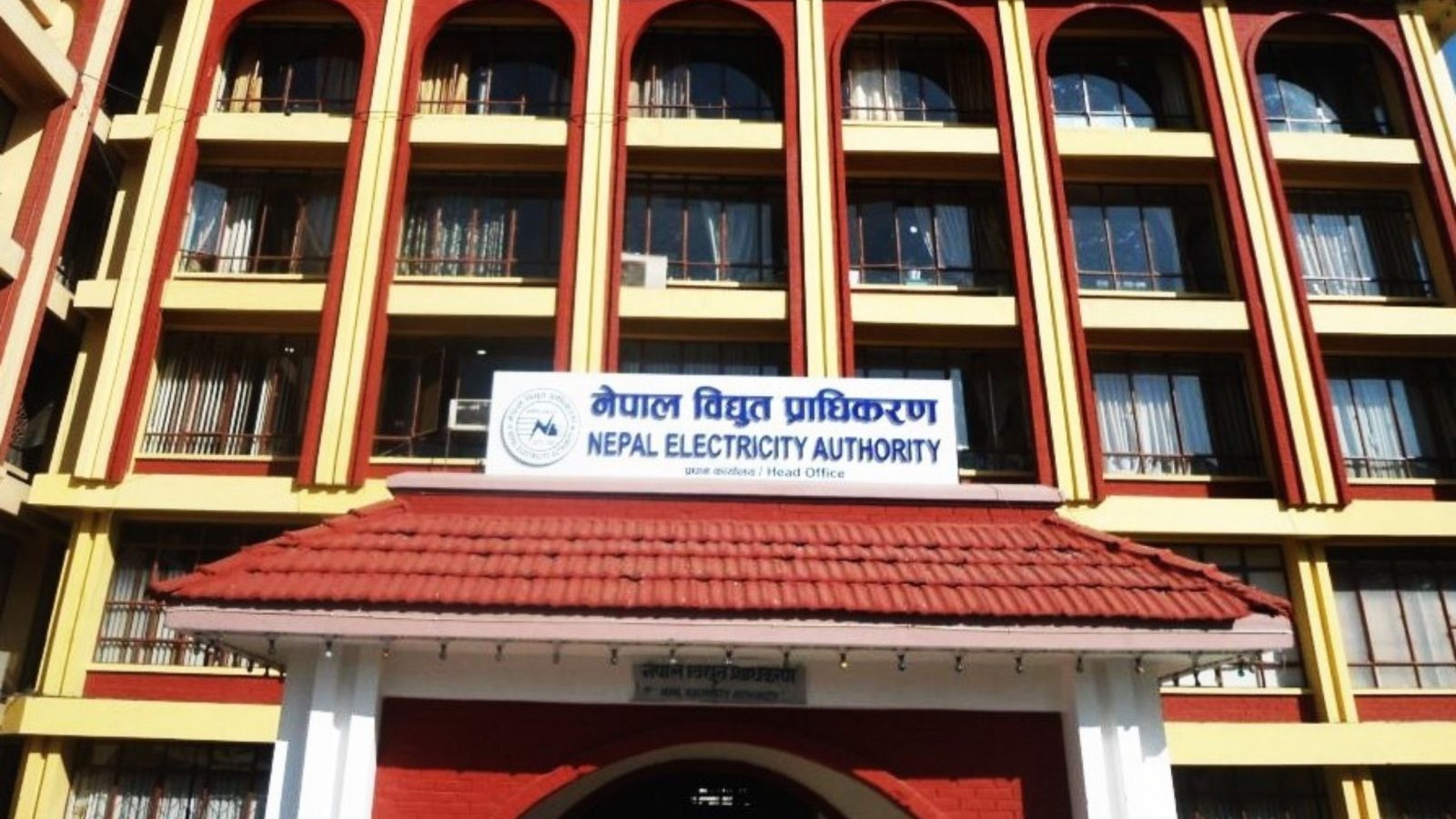
Nepal Electricity Authority (NEA) is the sole off-taker for virtually all independent power producers (IPPs) in Nepal. NEA has signed 494 Power Purchase Agreements (PPAs) covering 11,436 MW of generation capacity – of which 204 IPP-owned projects, with a combined capacity of 2,929.7 MW, have successfully reached their Commercial Operation Date (COD) and are actively generating power – with a further pipeline of 16,027 MW in PPA processing and 4,203 MW under 148 signed PPAs awaiting financial closure. (Source: NEA Annual Report 2024/25)
This analysis asks a single question: at what point, and under what conditions, does NEA’s PPA payment obligation exceed its capacity to pay – and what are the legal and fiscal consequences when it does?
This is not a hypothetical exercise. NEA’s virtually zero cash reserves as of mid-2025, its NPR 10 billion bridging loan from domestic commercial banks, and NPR 16.23 billion in creditors for power purchase – alongside NPR 272.58 billion in long-term borrowings already on its balance sheet – signal that the stress is beginning now, not in 2030. Sources for this analysis are NEA’s audited Annual Reports and Financial Statements (FY 2020/21 to 2024/25), the NEA White Paper 2025, NEA Financial Projections (November 2025), and the Energy Development Roadmap 2025.
2. Cost of Unit Economics
The starting point of any stress test is the cost structure. NEA procures power from four sources: its own legacy plants, its subsidiary companies, domestic IPPs, and Indian imports. The table below constructs the full cost per kWh across all sources for FY 2024/25, including an imputed economic cost for NEA’s own generation – a figure systematically omitted from its operational reporting.
| Power Source | Volume (GWh) FY 2024/25 | Total Cost (NPR Billion) | Cash Cost (NPR/kWh) | Economic Cost (NPR/kWh) – Imputed |
| NEA Own Generation (Legacy hydro: ~627 MW) | 2,953 | 2.08 | 0.70 | 5.88 ¹ (replacement cost basis) |
| NEA Subsidiary Purchases (Upper Tamakoshi, Rasuwagadhi, etc.) | 2,400 | 10.85 | 4.52 | 4.52 (PPA rate; CoD 2010–2020 vintage) |
| Domestic IPP Purchases (494 PPAs, 11,436 MW signed) | 8,606 | 53.33 | 6.20 | 6.20 (PPA rate; escalates 3%/yr for 8 yrs post-COD) |
| Indian Imports (dry-season shortfall cover) | 1,681 | 12.92 | 7.69 | 7.69 (spot; peaks at NPR 19/kWh on IEX during scarcity) |
| NEW: Storage PPA Tariff (ERC Feb 2026 directive; ≤100 MW) | Pipeline | – | 8.45 wet / 14.80 dry | Dry-season rate exceeds NEA’s NPR 9.44/kWh avg selling price |
| Blended Purchase Rate (purchased sources only) | 12,687 | 77.10 | NPR 6.08 | |
| Total Available Energy (all sources) | 15,641 | 79.18 | NPR 5.06 | Blended generation + purchase cost |
| NEA Avg Selling Price (FY 2024/25) | – | NPR 125.28 Bn revenue | NPR 9.44 | Includes NPR 17.47 Bn export revenue (2,380 GWh @ ~NPR 7.34/kWh avg) |
¹ Economic cost imputation for own generation: Replacement cost basis – 700 MW at USD 2 million/MW = NPR 190 Bn; annualised at 7% over 30 years = NPR 15.3 Bn/yr; per 2,953 GWh = NPR 5.18/kWh + NPR 0.70 O&M = NPR 5.88/kWh. Sources: NEA Annual Reports FY 2023/24 and 2024/25; NEA White Paper 2025.
The critical observation: The NPR 0.70/kWh ‘cost’ of NEA’s own generation reflects only cash O&M – zero depreciation, zero capital recovery. NEA’s legacy plants (Kulekhani, Marsyangdi, Trisuli) carry fully sunk capital not reflected in the per-unit cost. This creates a structural illusion: NEA appears profitable at the unit level because it has ~2,953 GWh of internal power lowering the higher-cost IPP mix. As legacy assets age toward end-of-life, this subsidy disappears. More immediately, the new ERC storage tariff of NPR 14.80/kWh in the dry season – the very season when NEA also pays NPR 7.69/kWh for Indian imports – already exceeds its NPR 9.44/kWh average retail tariff. This is the margin inversion in real time for every storage MW that comes online.
3. PPA Pipeline and Escalating Obligations
3.1 The Structure of NEA’s Purchase Obligation
Nepal’s power sector operates on a single-buyer model. Every megawatt of privately developed hydropower flows through a PPA with NEA as sole off-taker, at tariffs regulated by the ERC. NEA then sells at a nationally administered retail tariff – and the gap between what it pays and what it recovers from consumers is the defining fiscal stress in the sector. As the IPP portfolio scales toward the government’s 28,500 MW Energy Roadmap target, that gap and its management become among the most consequential fiscal questions in Nepal’s economy.
Projecting NEA’s purchase obligations requires tracking three inter-dependent variables: the volume of energy NEA must buy, the per-unit price it pays, and how both evolve as successive cohorts of projects enter commercial operation. None can be read in isolation – and the entry of storage projects into the portfolio, now governed by the ERC’s February 2026 directive, fundamentally reshapes the long-run picture.
3.2 The Tariff Architecture: Base Rates, Escalation, and the Cap
Every PPA under Nepal’s standard framework carries the same three-layer structure. The base rate is negotiated at around some point before the Financial Closure – currently approximately NPR 8.40/kWh for dry season and NPR 4.80/kWh for wet season on a standard RoR/PRoR project, yielding a blended average of approximately NPR 5.90/kWh. The escalation clause raises this base at 3% per year for 8 cycles post-COD. The permanent cap then freezes the tariff at Base × (1.03)^8 = Base × 1.2668 for the remaining 22 years of the 30-year concession.
For the current standard RoR/PRoR base of NPR 5.90/kWh, the cap is NPR 7.47/kWh. Once a project crosses year 8, its per-unit cost to NEA never rises again – making the cap NEA’s most important long-run cost containment mechanism for RoR projects. The ERC’s February 2026 Reservoir-Based Hydropower Directive, however, operates on a structurally different cost basis and the cap provides no analogous protection against the tariff trajectory it creates.
The ERC February 2026 Storage Directive (approved at ERC’s 299th meeting, Magh 20, 2082) establishes a regulatory framework specifically for reservoir projects – defined as projects with at least 15 days of active storage and generating at least 35% of annual production in the dry season. For projects up to 100 MW, it sets rates of NPR 8.45/kWh (wet season) and NPR 14.80/kWh (dry season), with the same 3% × 8 escalation structure. For projects above 100 MW – which includes every major strategic project in the pipeline – tariffs are determined on a cost-plus basis, making the smaller-project rates a floor, not a ceiling. Independent cost analysis (ECA / Santosh Thapa, 2025) estimates that large projects like Budhigandaki (1,200 MW) would require NPR 12.64/kWh wet and NPR 22.12/kWh dry to be commercially viable. This analysis uses the ERC minimum as the conservative base for all storage cohort calculations.
3.3 The Cohort Framework and Escalation Trajectory
Rather than projecting project by project, this analysis groups the pipeline into five cohorts by approximate COD vintage. The critical methodological decision is the seasonal energy split used to derive blended rates – particularly for storage projects.
The Q30 Standard. A project’s design discharge is calibrated to the flow the river equals or exceeds for 30% of the time – approximately 109 days per year. This is the Q30 standard. For standard RoR and PRoR projects, Q30 hydrology implies approximately 30% dry season and 70% wet season energy generation, consistent with the few percentage above 30% dry season energy share observed in representative executed PPAs in the past. For storage projects, which by ERC directive must generate at least 35% of annual production in the dry season and are specifically designed to shift wet-season water into dry-season generation, this analysis uses a 40% dry / 60% wet split – more conservative than the ERC’s 35% minimum, and reflective of the commercial purpose of storage. Applying these splits to the ERC storage tariff floor: Blended base = (0.40 × 14.80) + (0.60 × 8.45) = NPR 11.00/kWh.
| Cohort | Description | Approx. MW | COD Window | Blended Base Rate | Cap Rate (Year 8+) | Rate Basis |
| C1 | Existing operational fleet | 3,576 | Pre-2025 | NPR 5.19/kWh* | NPR 6.57/kWh | Back-calculated from NEA FY2024/25 actuals |
| C2 | Current construction pipeline | 4,303 | 2025–2027 | NPR 5.90/kWh | NPR 7.47/kWh | Current signed PPA norms |
| C3 | Mid-term RoR/PRoR wave | 7,121 | 2028–2031 | NPR 6.20/kWh | NPR 7.85/kWh | ~5% uplift over C2 reflecting ERC tariff revision |
| C4 | Storage / reservoir cohort | 5,000 | 2031–2033 | NPR 11.00/kWh** | NPR 13.93/kWh | ERC Feb 2026 directive minimum; Q30 split (40% dry/60% wet): (0.40×14.80)+(0.60×8.45) |
| C5 | Terminal ideal-mix build-out | 8,500 | 2034–2038 | NPR 8.40/kWh*** | NPR 10.64/kWh | GWh-weighted blend: 30% RoR, 30% PRoR, 35% storage at ERC min, 5% other |
* C1 back-calculated: at n=6 escalation cycles in FY2024/25, implied base is NPR 6.20/(1.03)⁶ ≈ NPR 5.19. Cohort 1 hits its permanent cap in FY2026/27.
** ERC minimum for ≤100 MW storage. Cost-plus determination for large projects (Budhigandaki, Upper Arun) will yield materially higher rates – this is the conservative floor.
*** C5 GWh-weighted blend (applying ~55% CF for storage vs ~45% for RoR): 30% RoR at 6.20 + 30% PRoR at 7.00 + 35% storage at 11.00 + 5% other at 9.00 ≈ NPR 8.40/kWh.
Each cohort’s effective rate at a given projection year is Base × (1.03)^n, capped at n=8. The table below shows the escalation trajectory for each cohort across all projection years, with permanent caps bolded:
| Cohort | Base Rate | FY2024/25 | FY2026/27 | FY2029/30 | FY2031/32 | FY2092/93 |
| C1 | NPR 5.19 | 6.20 (n=6) | 6.57 (CAP) | 6.57 (CAP) | 6.57 (CAP) | 6.57 (CAP) |
| C2 | NPR 5.90 | – | 6.08 (n=1) | 6.64 (n=4) | 7.04 (n=6) | 7.47 (CAP) |
| C3 | NPR 6.20 | – | – | 6.39 (n=1) | 6.77 (n=3) | 7.85 (CAP) |
| C4 | NPR 11.00 | – | – | – | 11.33 (n=1) | 13.93 (CAP) |
| C5 | NPR 8.40 | – | – | – | – | 10.64 (CAP) |
Cohort 1 freezes permanently at NPR 6.57 from FY2026/27 – acting as a long-run downward anchor on the blended portfolio rate throughout the projection. However, this anchor cannot offset the structural rate jump introduced by Cohort 4’s entry. The GWh-weighted blended IPP rate at each projection year, with GWh weights reflecting each cohort’s proportional MW share adjusted for capacity factor, is derived as follows:
| BLENDED RATE DERIVATION – ALL PROJECTION YEARS FY2024/25: C1=100% → 1.00×6.20 = 6.20/kWh FY2026/27: C1=45%, C2=55% → 0.454×6.57 + 0.546×6.08 = 2.98 + 3.32 = 6.30/kWh FY2029/30: C1=24%, C2=29%, C3=47% → 0.238×6.57 + 0.287×6.64 + 0.475×6.39 = 1.56+1.90+3.04 = 6.50/kWh FY2031/32: C1=17%, C2=20%, C3=35%, C4=28% [C4 weight elevated: ~55% CF vs ~45% RoR] → 0.17×6.57 + 0.20×7.04 + 0.35×6.77 + 0.28×11.33 = 1.12 + 1.41 + 2.37 + 3.17 = 8.07/kWh FY2092/93: C1=13%, C2=15%, C3=25%, C4=18%, C5=29% → 0.13×6.57 + 0.15×7.47 + 0.25×7.85 + 0.18×13.93 + 0.29×10.64 = 0.85+1.12+1.96+2.51+3.09 = 9.53/kWh Subsidiary component (2,400 GWh/yr at NPR 4.50/kWh = NPR 10.8B) held constant throughout. |
3.4 PPA Payment Obligation Projections
| Fiscal Year | Total MW | Total GWh | IPP Wtd. Rate (NPR/kWh) | Blended Rate incl. Sub (NPR/kWh) | Total Payment (NPR Billion) | Key Milestone |
| 2024/25 | ~3,576 | 11,006 | 6.20 | 5.83 | 64.2 | Base year. 148 projects, 4,303 MW under construction. All current fleet is RoR/PRoR – no storage in portfolio. |
| 2026/27 (FY 2083/84) | ~7,879 | 33,144 | 6.30 | 6.17 | 204.5 | Bulk of construction cohort achieves COD. Payment triples from base year. Rate growth remains moderate – still no storage in portfolio. |
| 2029/30 (FY 2086/87) | ~15,000 | 58,382 | 6.50 | 6.42 | 374.7 | Massive RoR/PRoR volume scaling. Annual obligation crosses USD 2.5 billion equivalent. Blended rate growth controlled at ~NPR 0.25/kWh above FY2026/27. |
| 2031/32 (FY 2088/89) | ~20,000 | 75,813 | 8.07 | 7.96 | 603.0 | STORAGE INFLECTION POINT. Budhigandaki (1,200 MW), Upper Arun PRoR (1,061 MW), Uttarganga (828 MW) and cohort peers achieve COD at ERC-framework rates. Blended IPP rate jumps NPR 1.57/kWh in two years. |
| 2092/93 (Terminal) | 28,500 | 93,198 | 9.53 | 9.40 | 876.0 | Terminal projection (Energy Roadmap 2081 horizon). Blended purchase rate of NPR 9.40/kWh approaches NEA’s current retail selling price of NPR 9.44/kWh. Requires 1,500 kWh/capita domestic demand and 15,000 MW of cross-border export realisation. |
3.5 Findings and Sensitivity
| FINDING 1 – THERE IS NO BENIGN RATE CEILING The current market assumption that the blended portfolio rate would stabilise below NPR 7.00/kWh rested on a mistaken premise: that large government-backed storage projects would carry compressed tariffs as a policy instrument. The ERC’s February 2026 directive forecloses this entirely. Storage projects must now be commercially competitive with IPP-sector economics: 30% equity cap, 17% return, full cost-plus recovery – competitive with private IPPs, not below them. At the ERC minimum (NPR 8.45 wet / 14.80 dry) using Q30 40/60 split, the blended storage base rate is NPR 11.00/kWh – nearly double the current RoR norm. The terminal blended purchase rate is NPR 9.40/kWh vs NEA’s current retail price of NPR 9.44/kWh. Gross margin at terminal: NPR 0.04/kWh – before T&D losses, O&M, and debt service. The architecture of the tariff framework, not a policy failure, produces this outcome. |
| FINDING 2 – PRICE IS NOW A MEANINGFUL VARIABLE, NOT A ROUNDING ERROR Between FY2024/25 and terminal, total payment grows 13.6× (NPR 64B to NPR 876B). Volume accounts for ~62% of that growth; tariff escalation and the storage premium account for ~38%. In a RoR-only model the split would be 88% volume / 12% price. The storage cohort makes per-unit rate management a first-order fiscal lever.Competitive procurement, the two-part tariff option in the ERC directive (capacity charge + energy charge), and rigorous cost verification for cost-plus projects are tools NEA must deploy before storage PPAs are signed – not after. |
| FINDING 3 – FY2031/32 IS THE SINGLE LARGEST RATE INFLECTION IN THE 30-YEAR TRAJECTORY The blended IPP rate jumps from NPR 6.50/kWh (FY2029/30) to NPR 8.07/kWh (FY2031/32) – NPR 1.57/kWh in approximately two years – driven entirely by theC4 storage cohort entering at NPR 11.33/kWh (ERC base + 1 escalation). This is not a marginal pricing shift; it is a structural step change. Every NPR 1.00 increase in the storage cohort’s blended base rate adds approximately NPR 20–25 billion to annual payment obligations at scale. The cost-plus determination for large projects above 100 MW means final negotiated rates for Budhigandaki and Upper Arun will set a benchmark. If the industry analysis (ECA/Santosh Thapa) suggesting NPR 12.64–22.12/kWh ranges for those projects is realised, FY2031/32 total payment could substantially exceed the NPR 603B figure modelled on the ERC minimum floor. |
Sensitivity. If actual storage rates for large projects average 20% above the ERC minimum – reflecting cost-plus outcomes for Budhigandaki and Upper Arun – the C4 blended base rises from NPR 11.00 to NPR 13.20/kWh, pushing terminal payment from NPR 876B toward approximately NPR 1,020B: Nepal’s PPA liability crossing NPR 1 trillion annually at roadmap completion. If storage deployment is halved (5,000 MW rather than ~10,000 MW), the terminal blended rate falls to approximately NPR 8.20/kWh and payment to approximately NPR 765B – but at the cost of the dry-season energy security the roadmap depends on. On volume, 80% realisation of the 28,500 MW target reduces terminal payment proportionally to approximately NPR 701B, but the per-unit rate trajectory is unaffected. The fundamental tension is that Nepal cannot simultaneously achieve energy security (requiring storage at commercially viable rates), fiscal sustainability (requiring low blended costs), and private-sector-led investment (requiring competitive returns) without retail tariff reform that closes the gap between the NPR 9.40/kWh blended purchase cost this analysis projects and the NPR 9.44/kWh current retail price – a gap that is structurally near-zero at terminal and deeply negative once T&D losses, O&M, and debt service are layered in.
4. Stress Scenarios
In each scenario, the key variable is whether NEA’s gross margin per unit – selling price minus blended purchase cost – can sustain operating expenses, transmission losses, and debt service.
Scenario A – Tariff Freeze (The Baseline Erosion)
Assumption: ERC does not revise consumer tariffs through 2030. Retail selling price remains at NPR 9.44/kWh or declines marginally (it has fallen from NPR 9.66 in FY 2021/22 to NPR 9.44 in FY 2024/25 – a downward trend). PPA rates escalate 3% per annum under legacy contracts. Storage PPAs add high-cost dry-season exposure at ERC February 2026 framework rates.
| Year | Blended Purchase Rate (NPR/kWh est.) | Retail Selling Price (NPR/kWh) | Gross Margin (NPR/kWh) | Annual Gross Margin (NPR Billion, ~15,000 GWh sold) |
| FY 2024/25 (Base) | 6.08 | 9.44 | 3.36 | ~50.4 Bn ✓ Comfortable |
| FY 2026/27 | 6.47 | 9.44 | 2.97 | ~44.6 Bn ⚠ Narrowing |
| FY 2029/30 | 7.00 | 9.44 | 2.44 | ~36.6 Bn ⚠ Tightening toward debt service floor |
| FY 2031/32 ★ | 8.75* | 9.44 | 0.69 | ~10.4 Bn ✗ Cannot cover NPR 28+ Bn debt service |
* FY 2031/32 blended rate: consistent with Chapter 3’s storage inflection projection. Assumes 28% storage weight at ERC framework rates (NPR 11.33–11.63/kWh blended, reflecting ERC minimum plus partial escalation), 57% legacy RoR/PRoR IPP at NPR 7.50, 15% Indian imports at NPR 7.69. ★ = Estimated margin inversion zone. NEA’s debt service at NPR 28+ Bn derived from total loan portfolio of NPR 289.46 Bn at implied average ~7% interest + principal amortisation. Sources: NEA Annual Reports; NEA Financial Projection 2025.
Finding: Under a tariff freeze, gross margin per unit collapses from NPR 3.36 to below NPR 1.00 by FY2031/32. At that margin level – and with ~40,000+ GWh being purchased – NEA cannot service its debt, creating a DSCR breach below the generally mandated 1.2 × MDB covenant. The utility becomes structurally dependent on Financial Viability Gap Funding (FVGF) from the Government of Nepal – a mechanism NEA has already formally modelled in its financial plans but which is constrained by GoN’s own fiscal capacity.
Scenario B – Low Hydrology + Export Market Disruption
Assumption: A severe drought year (winter precipitation at 20–25% of normal, like those seen in the conditions of FY 2022/23 and FY 2023/24) coincides with an India export market disruption – either IEX price collapse to NPR 3–4/kWh during monsoon glut, or India capping Nepal’s export corridor.
The historical data is unambiguous: in FY 2022/23 (winter precipitation at 21.5% of normal), NEA’s own generation fell to 2,930 GWh – a 10.1% contraction. In FY 2023/24 (20.8% of normal), generation dropped to 2,911 GWh with the dry-season window yielding only 755.6 GWh. Each drought year forced NEA to import an additional NPR 16–20 billion of expensive Indian power: NPR 19.70 Bn in FY 2022/23, NPR 16.92 Bn in FY 2023/24.
Layer in an export disruption: NEA’s export revenue in FY 2024/25 was NPR 17.47 Bn (2,380 GWh). Exports are entirely wet-season concentrated – zero exports occur Poush to Baishakh (December–April). If the IEX monsoon spot price crashes to NPR 3/kWh (from the NPR 7.34/kWh average NEA currently realises), the revenue loss is approximately NPR 10.3 Bn in a single year. This is an acute, not chronic, liquidity shock – but it arrives at a utility already running near-zero cash. The downstream effect: delayed PPA payments to IPPs, who in turn default on domestic loans (Banks, HIDCL, EPF, CIT). The banking sector’s exposure to hydropower under mandatory portfolio lending makes this systemic.
The take-or-pay trap: In a drought year, NEA’s own low-cost generation contracts, forcing it to either import expensive Indian power OR curtail IPP generation. Under take-or-pay PPAs, curtailment triggers Deemed Energy payments – NEA pays the IPP for power it did not receive. This is the double-loss: NEA pays for electricity it cannot generate domestically AND for electricity it cannot evacuate from IPPs.
Scenario C – The Demand-Side Illusion: Energy Without a Market
Assumption: The Chapter 3 projection table is built on an implicit premise that is never stated: that every gigawatt-hour NEA is contractually obligated to purchase will find a buyer. The NPR 876B terminal annual payment obligation is recoverable only if NEA can sell approximately 93,198 GWh – either domestically or through profitable export. This scenario stress-tests what happens when both the domestic consumption target and the export market assumption disappoint simultaneously, which is the more probable outcome than either failing in isolation.
The two demand pillars the projection relies on:
The Energy Roadmap 2081 requires domestic per capita consumption to reach 1,500 kWh per capita by the terminal year – a growth from the current ~450 kWh/capita. Achieving this requires approximately 12.8% annual growth in per capita electricity consumption over ten years. Nepal’s historical growth rate is 6–8% per year. At 8% compounded growth, per capita consumption reaches approximately 971 kWh by 2035. At 6%, it reaches 806 kWh. The 1,500 kWh target requires growth roughly double the historical rate, sustained for a decade – an assumption that has never been achieved.
Simultaneously, the roadmap requires 15,000 MW of reliable cross-border export capacity – 10,000 MW to India and 5,000 MW to the broader BBIN market. Nepal currently exports ~2,380 GWh/year to India at an average of NPR 7.34/kWh. Reaching 15,000 MW of export implies approximately 65,700 GWh/year of export sales – a 27-fold increase from the current base. This requires transmission infrastructure not yet built, an Indian willingness to absorb Himalayan hydro at profitable prices, and a BBIN cross-border electricity framework that as of 2026 exists only in concept.
The structural problem with the export assumption:
Nepal’s hydro generation is wet-season concentrated – approximately 70% of annual output arrives June through October. This is precisely when India’s rapidly expanding solar and wind fleet (targeting 500 GW of renewable capacity by 2030, up from ~250 GW in 2025) generates its own peak output, creating a monsoon energy surplus on the Indian grid. The result: IEX day-ahead market prices in June–September already regularly fall to NPR 3–5/kWh, and this compression will deepen as India’s renewable capacity grows. Nepal’s comparative advantage in Himalayan hydro diminishes in exactly the season its plants generate most of their energy.
Under take-or-pay, demand failure does not reduce NEA’s cost – it increases NEA’s loss:
This is the critical asymmetry. NEA’s payment obligation of NPR 876B at terminal is fixed by contract regardless of whether domestic consumers buy the power or whether India’s grid operator accepts the export. If NEA cannot sell the energy, it still must pay the IPP. The revenue simply does not arrive.
| Demand Scenario | Domestic GWh Sold | Export GWh Sold | Total Revenue (NPR Billion) | NEA Purchase Cost (NPR Billion) | Annual Deficit (NPR Billion) |
| Roadmap achieved – 1,500 kWh/cap domestic + 15,000 MW export at NPR 7.34/kWh | 49,500 | 43,698 | 467 + 321 = 788 | 876 | 88 |
| Realistic growth – 900 kWh/cap domestic + export at compressed NPR 5.00/kWh | 29,700 | 63,498 | 280 + 317 = 597 | 876 | 279 |
| Stagnation + disruption – 700 kWh/cap domestic + India absorbs only 20,000 GWh at NPR 3.00/kWh | 23,100 | 20,000 | 218 + 60 = 278 | 876 | 598 |
Revenue calculated at NPR 9.44/kWh average domestic retail and the scenario export rate respectively. Population assumed at 33 million.
Finding:
Even the optimistic scenario produces a structural deficit. Under the roadmap’s own best-case assumptions — 1,500 kWh/capita achieved and 43,698 GWh exported at current average rates – NEA’s terminal annual deficit is NPR 88B. This is because the blended purchase cost (NPR 9.40/kWh) leaves essentially zero domestic margin, and the export price (NPR 7.34/kWh) is below purchase cost. NEA is buying power at NPR 9.40 and selling a large portion of it to India at NPR 7.34 — a NPR 2.06/kWh loss on every export unit. The roadmap’s fiscal architecture requires Nepal to subsidise India’s grid with NPR 2/kWh on roughly 40–70% of its total generation, indefinitely, simply to honour its take-or-pay obligations.
Under the realistic demand scenario, where per capita consumption reaches 900 kWh and export prices compress to NPR 5.00/kWh as India’s monsoon surplus grows, the annual deficit reaches NPR 279B – approximately NPR 28 crore every day. This is not a stress scenario in the tail-risk sense. It is a plausible central case given historical growth rates and India’s documented renewable buildout trajectory.
Under the stagnation and disruption scenario, where domestic consumption stagnates at 700 kWh/capita and India’s market absorbs only a fraction of Nepal’s export at distressed prices, the deficit approaches NPR 600B annually. At this level, NEA’s entire projected revenue base is insufficient to cover purchase obligations, let alone debt service, T&D costs, or O&M. The utility does not gradually deteriorate – it ceases to function as a commercial enterprise.
The take-or-pay trap in its purest form: In a scenario where demand disappoints and exports compress, NEA cannot reduce its payment obligations because those obligations are contractually fixed. It cannot instruct IPPs to generate less without triggering Deemed Energy compensation. It cannot redirect energy to third-party buyers because the IPP-NEA monopoly lock-in prevents alternative sales. It cannot lower consumer tariffs to stimulate demand without widening the margin inversion. And it cannot raise export prices because those are market-determined. Every degree of freedom available to a normal commercial entity – volume flexibility, pricing power, market access – has been contractually removed. What remains is a fixed outgoing obligation with a variable and potentially collapsing revenue base
The single assumption holding the model together is that India will reliably absorb 40–70% of Nepal’s terminal generation at above-cost prices. This is not a bilateral treaty obligation. It is a market assumption. Nepal’s entire 28,500 MW energy ambition rests on a counterparty – the Indian electricity market – over which Nepal has no contractual rights, no pricing power, and no enforcement mechanism.
5. Liquidity and Sovereign Backstop
NEA’s liquidity position as of mid-2025 is already stressed, and the sovereign mechanisms available to rescue it are legally constrained.
| Indicator | Current Status | Stress Implication |
| Cash and cash equivalents | Near-zero; NPR 10 Bn bridging loan secured | No liquidity buffer for even a single month’s delayed export payment. |
| Creditors for Power Purchase (PPL arrears) | NPR 16.23 Bn (standalone, FY 2081/82) | IPPs already owed NPR 16+ Bn. Growth in this figure indicates deepening circular debt. |
| Dedicated Feeder Tariff Dispute | NPR 17.15 Bn locked in legal dispute with industrial consumers | This receivable is real but effectively illiquid. Council of Ministers directed recovery in 2024; enforcement pending. |
| Total Debt (NEA standalone) | NPR 289.46 Bn; D/E ratio = 1.01 | 66.4% foreign currency denominated. NPR depreciation of >80% against USD since 2010 adds structural FX loss. |
| Current DSCR | 2.4× to 3.7× (reported) | Comfortable now. Covenant floor = 1.2×. Falls toward breach under Scenario A by 2031. |
| True profitability (White Paper) | Net LOSS of NPR 5.26 Bn after proper depreciation | Reported NPR 9.07 Bn profit is a pre-depreciation artefact. Economic loss already exists. |
| Sovereign guarantee headroom | ~0.9% of GDP set to be used vs. 1.0% statutory cap (Public Debt Management Act 2022) | GoN is effectively set to exhaust its legal capacity to issue new explicit guarantees for NEA PPA obligations. |
| ICRA Nepal Credit Rating | AA+ (achieved via implicit sovereign support notching) | Standalone commercial rating: estimated A or BBB. Rating is one government policy change away from downgrade. |
The most important constraint is the 1.0% GDP sovereign guarantee cap under the Public Debt Management Act 2022. With Nepal’s existing guarantee exposure set to reach at ~0.9% of GDP with addition of few strategically important national projects, the government is mathematically prohibited from directly underwriting new PPA obligations or infrastructure loans at scale. NEA’s AA+ credit rating – which enables lower borrowing costs – rests entirely on implied sovereign support. If GoN’s own fiscal position tightens – a real risk given chronic current account deficits – even this implied backstop becomes unreliable.
6. Legal Exposures
The legal structure of Nepal’s PPAs concentrates risk firmly on NEA. Understanding the covenant architecture is essential to assessing the consequences of a payment stress event.
| PPA Provision | Mechanism | Stress Implication |
| Take-or-Pay | NEA must pay for agreed energy volumes whether or not it can evacuate or sell the power. | In a domestic demand shortfall or transmission congestion, NEA pays for power it cannot monetise. Estimated ~800–1,000 MW wet-season surplus already faces evacuation constraints. |
| Deemed Energy | If NEA curtails a project due to grid failure or system instruction, it must compensate the IPP for the energy the plant could have delivered. | NEA is currently active in 17 contract-related arbitration disputes. As curtailment grows with the pipeline, Deemed Energy liability grows proportionally. |
| 3% Annual Escalation (8 cycles) | Standard PPAs escalate the purchase rate 3% per annum for 8 years post-COD, then lock permanently. | A project with a FY 2025 COD at NPR 6.00/kWh will cost NPR 7.60/kWh by year 8 (permanent cap). With retail tariff frozen at NPR 9.44, the margin on that project narrows materially within a decade. |
| Carbon Rights Ambiguity | PPA agreements do not clearly assign carbon rights or I-REC ownership between IPP and NEA. | NEA’s potential NPR 1 Bn+ annual carbon revenue stream is legally disputed with IPPAN. Unresolved ambiguity clouds the green finance strategy. |
| BOOT Transfer (30–35 yrs) | At license expiry, projects transfer free of charge to GoN in good working condition. | Positive long-run: NEA inherits zero-cost generation as legacy licenses expire (Andhi Khola, Jhimruk, Khimti approaching in late 2020s). But structural relief is slow – 1–2 GW of zero-cost capacity over 15 years against 40,000+ GWh of escalating IPP obligations. |
| FX-Indexed PPAs | Older foreign-funded projects (e.g., Upper Trishuli-1, 216 MW) carry USD-indexed tariff components. GoN/NEA absorbed FX risk via Subsidiary Loan Agreements. | NPR has depreciated >80% against USD since 2010. With 66.4% of NEA’s debt in foreign currency, any accelerated FX depreciation simultaneously raises debt service cost AND embedded USD-linked PPA costs. |
The most acute near-term legal risk is the 17 active arbitration disputes. These are concentrated around Deemed Energy and contract interpretation. An adverse ruling on even one large-capacity project (e.g., a 100+ MW IPP claiming Deemed Energy for a transmission-caused curtailment) could add NPR 1–3 Bn to NEA’s payables in a single judgment – against a near-zero cash position.
7. Some Relief Valves that could help NEA
Paradoxically, the two most significant constraints on Nepal’s energy ambition are currently the most significant protections on NEA’s balance sheet.
7.1 The Supreme Court Freeze (17,000 MW)
The 2025 Supreme Court ruling – restricting infrastructure development in protected areas and stalling 221 projects totalling 17,000 MW – is analytically a fiscal relief valve, not just a policy setback. Had these projects signed PPAs and proceeded to construction, NEA’s take-or-pay payment obligation would escalate by an estimated NPR 100–170 Bn per annum at scale, compressing the margin inversion timeline from 2031 to approximately 2027–2028 under a tariff-freeze scenario. The court freeze gives the energy policy architecture time it does not otherwise have.
7.2 The Take-and-Pay Policy for RoR Projects Above 10 MW
The FY 2082/83 budget’s introduction of take-and-pay – meaning NEA pays only for electricity it actually consumes – has been widely criticised as an investor-confidence blow. It is. However, the 1,858 MW RoR and 3,177 MW PRoR blocks that are suspended under this policy represent NPR 32–40 Bn of avoided annual PPA obligations that NEA’s transmission and demand infrastructure cannot absorb. Banks have correctly determined these projects are unbankable without take-or-pay guarantees. As of early 2026, the NEA Board has not issued a definitive reversal for projects above 10 MW, and the policy ambiguity is effectively serving as a de-facto moratorium on new PPA commitments that NEA cannot afford.
The danger: a future government could reverse both constraints – the Supreme Court via legislation, and take-and-pay via budget amendment – without the transmission infrastructure or export market to absorb the resulting generation. At that point, Nepal transitions from controlled fiscal stress to structural insolvency at NEA.
8. The Margin Inversion Point: When does it break?
Bringing the scenarios together, the central analytical finding of this stress test is:
| CENTRAL FINDING – THE MARGIN INVERSION Under a tariff-freeze scenario – which has effectively been in place since 2021, with the ERC’s last major revision reducing, not increasing, consumer prices – NEA’s blended power purchase cost will exceed its average retail selling price of NPR 9.44/kWh between FY 2030 and FY 2032, as storage PPAs at ERC-framework rates blend into the portfolio at scale. At that point, NEA generates an operating loss on every unit purchased and sold domestically, and becomes fully dependent on export revenue to remain solvent. Export revenue – concentrated in monsoon season, priced on a volatile Indian exchange at NPR 3–19/kWh – is the single thread holding NEA’s financial model together. At the terminal projection year (FY2092/93), the blended purchase rate of NPR 9.40/kWh leaves a gross margin of NPR 0.04/kWh before any operating costs. This is not a distant risk. It is the mathematical outcome of current policy trajectory. |
The margin inversion is not the end of NEA. It is the beginning of a managed insolvency supported by four increasingly strained mechanisms: GoN equity injections (already conducted by converting overdue debt), FVGF grants (already formally modelled by NEA but not budgeted at scale), multilateral credit lines (increasingly conditioned on structural reform), and BOOT inheritance of first-generation projects (valuable but slow – 1–2 GW over 15 years). None of these mechanisms is scalable to a NPR 200–876 Bn annual PPA obligation without fundamental tariff reform.
The single most important policy lever available – and the one most consistently avoided – is ERC-mandated cost-reflective tariff revision. Nepal’s last effective tariff increase was implemented in Marga 2078 (late 2021). At a 3% annual PPA escalation, the cost-tariff gap has widened by roughly NPR 0.60–0.80/kWh since 2021 on a blended basis, with no compensating revenue adjustment. Each year of delay adds structural deficit that must eventually be covered by GoN or absorbed in payment arrears to IPPs – further undermining the private investment climate the energy roadmap depends upon.
9. Conclusions
NEA is not insolvent today. Its reported DSCR of 2.4–3.7× looks healthy, and its AA+ credit rating holds. But the stress test reveals that this stability rests on three fragile foundations: legacy generation assets providing near-free power (NPR 0.70/kWh cash cost) that is irreplaceable at current construction economics, export revenue from a volatile Indian market, and a tariff structure frozen below cost-reflective levels. Each of these foundations weakens progressively as the PPA pipeline matures.
The margin inversion – the point at which NEA’s weighted average purchase cost exceeds its retail selling price – is projected around FY 2030–2032 under current trajectory. At that point, NPR 374–603 Bn of annual PPA obligations will sit against a retail revenue base insufficient to cover them, with debt service of NPR 28+ Bn competing for the same shrinking surplus. The sovereign guarantee ceiling is already set to exhaust. The domestic banking sector, deeply exposed to hydropower NPLs, cannot absorb a circular debt cascade. The IMF and World Bank have already flagged NEA as a high-risk SOE contingent liability.
The two structural relief valves currently in place – the Supreme Court freeze on 17,000 MW and the take-and-pay policy for large RoR projects – are providing fiscal breathing room that energy policy is not using productively. The priority should be:
1. Mandatory ERC tariff revision to a cost-reflective level before 2027. Nepal’s last effective tariff increase was implemented in Marga 2078. At 3% annual PPA escalation, the cost-tariff gap has widened by NPR 0.60–0.80/kWh since then with no compensating revenue adjustment. The February 2026 ERC storage directive has now locked in a trajectory where the terminal blended purchase cost reaches NPR 9.40/kWh – approaching the current retail selling price of NPR 9.44/kWh before a single rupee of O&M, transmission loss, or debt service is counted. Each year of tariff freeze adds structural deficit that must eventually be covered by GoN or absorbed as payment arrears to IPPs, further undermining the private investment climate the roadmap depends on. Tariff revision is not a political choice – at this stage it is an arithmetically unavoidable one, and delay only increases the magnitude of the eventual adjustment.
2. No PPA without evacuation certainty – transmission investment must be locked to signing rates. The NPR 8.07/kWh blended rate projected for FY2031/32 is structurally unaffordable if the energy cannot be evacuated and sold. NEA currently has estimated 800–1,000 MW of wet-season surplus already facing evacuation constraints, and the transmission infrastructure required to absorb 28,500 MW requires approximately USD 5.6 billion of investment not yet committed. A mandatory condition should be established in the PPA approval framework: no PPA is approved by ERC without a concurrent, costed, and time-bound transmission evacuation plan. The existing policy of signing generation PPAs and building transmission later is the single largest structural contributor to the stranded-asset and take-or-pay trap risk identified throughout this analysis.
3. Rigorous cost verification for large storage projects above 100 MW before PPA signing. The ERC’s February 2026 directive correctly introduces a cost-plus framework for large reservoir projects. But cost-plus without rigorous independent verification is a blank cheque. Industry analysis suggests rates of NPR 12.64–22.12/kWh may be required for projects like Budhigandaki and Upper Arun to be commercially viable. At NPR 14.80/kWh dry-season rates, these projects already exceed NEA’s average retail selling price of NPR 9.44/kWh before a single escalation cycle. NEA must establish an independent capital cost audit mechanism – commissioned before PPA signing, not after – with a binding cap on the percentage by which approved costs can deviate from the independent estimate (the directive permits a 25% capital cost uplift; this needs enforcement teeth). Every NPR 1.00 increase in the storage cohort’s blended base rate adds NPR 20–25 billion to annual payment obligations at scale.
4. Demand growth must be treated as a binding precondition to PPA commitments, not an assumption made after them. The Chapter 3 projection table implicitly assumes 93,198 GWh of annual demand at terminal – requiring Nepal to reach approximately 1,500 kWh per capita. Nepal’s historical consumption growth rate of 6–8% per year delivers approximately 800–970 kWh per capita by 2035, not 1,500. The gap between the roadmap’s demand assumption and a realistic central-case trajectory represents tens of thousands of GWh per year that NEA will be contractually obligated to purchase but unable to sell domestically. PPA pipeline commitments beyond 15,000 MW of operational capacity should be formally gated on demonstrated domestic demand milestones – measured against a published consumption-per-capita ladder — rather than approved against aspirational roadmap targets. Generation infrastructure that outpaces demand does not create energy security; it creates PPA liability without revenue.
5. Export revenue must be secured through binding agreements before PPAs that depend on it are signed. The entire terminal fiscal architecture of the NPR 876B obligation rests on Nepal exporting 40–70% of its generation to India at profitable rates. This is a market assumption, not a contractual entitlement. As India’s own monsoon-season renewable surplus grows – the country is targeting 500 GW of renewable capacity by 2030 – IEX wet-season prices will compress further, directly eroding the revenue stream Nepal’s generation economics depend on. Selling power to India at NPR 3–5/kWh while buying it from IPPs at NPR 9.40/kWh is a structural loss of NPR 4–6/kWh on every export unit. Nepal must negotiate binding, volume-committed, price-floor Power Trade Agreements – not spot-market access – with India and BBIN partners as a formal precondition to approving PPAs whose revenue projections depend on export offtake. If those agreements cannot be secured at above-cost prices, the PPAs that depend on them should not be signed.
Without these actions, the energy roadmap’s ambition will accelerate NEA toward the very insolvency that would make the roadmap undeliverable.
Data Sources
NEA Annual Reports and Financial Statements FY 2077/78–2081/82; NEA White Paper 2025; NEA Financial Projection (November 2025); Energy Development Roadmap 2081 (MoEWRI); Energy Consumption and Export Strategy 2083 (MoEWRI); IPPAN Energy Statistics 2026; DoED Generation License Registry (May 2026); Nepal Rastra Bank Unified Directives 17/082 and 21/2081; Electricity Consumer Tariff Determination Directives, 2020; Directive on Electricity Purchase and Sale from Reservoir-Based Power Plants 2082 (ERC, Magh 20, 2082); ECA / Santosh Thapa, ‘Deconstructing the Storage Hydro PPA Pricing Framework’ (2025); Public Debt Management Act 2022; Directives on Power Purchase and Sale of Storage-type Hydropower Projects, 2026