
The T+2 Process
The ordinary secondary-market trade on NEPSE in dematerialised shares. It follows the money and the shares from buyer to seller between trade day (T) and settlement day (T+2), names the party legally responsible at each step, and explains what happens when a step fails.
Out of scope: IPO/primary issues, government bonds, block trades, off-market transfers and margin trading, except where margin trading changes the normal flow.
Instruments referred to
| Short name | Instrument | Made by |
|---|---|---|
| Act | धितोपत्र सम्बन्धी ऐन, २०६३ | Parliament |
| Broker Regs | धितोपत्र व्यवसायी (धितोपत्र दलाल तथा धितोपत्र व्यापारी) नियमावली, २०६४ | Government of Nepal |
| CDS Regs | धितोपत्रको केन्द्रीय निक्षेप सेवा नियमावली, २०६७ | Government of Nepal |
| Listing Regs | धितोपत्र सूचीकरण तथा कारोबार नियमावली, २०७५ | Government of Nepal |
| CDS Bylaws | धितोपत्र केन्द्रीय निक्षेप सेवा विनियमावली, २०६८ | CDSC, approved by SEBON |
| CSB | धितोपत्र कारोबार राफसाफ तथा फछ्र्यौट विनियमावली, २०६९ | CDSC, approved by SEBON |
| Trading Bylaws | धितोपत्र कारोबार सञ्चालन विनियमावली, २०७५ | NEPSE, approved by SEBON |
1. The players and the accounts
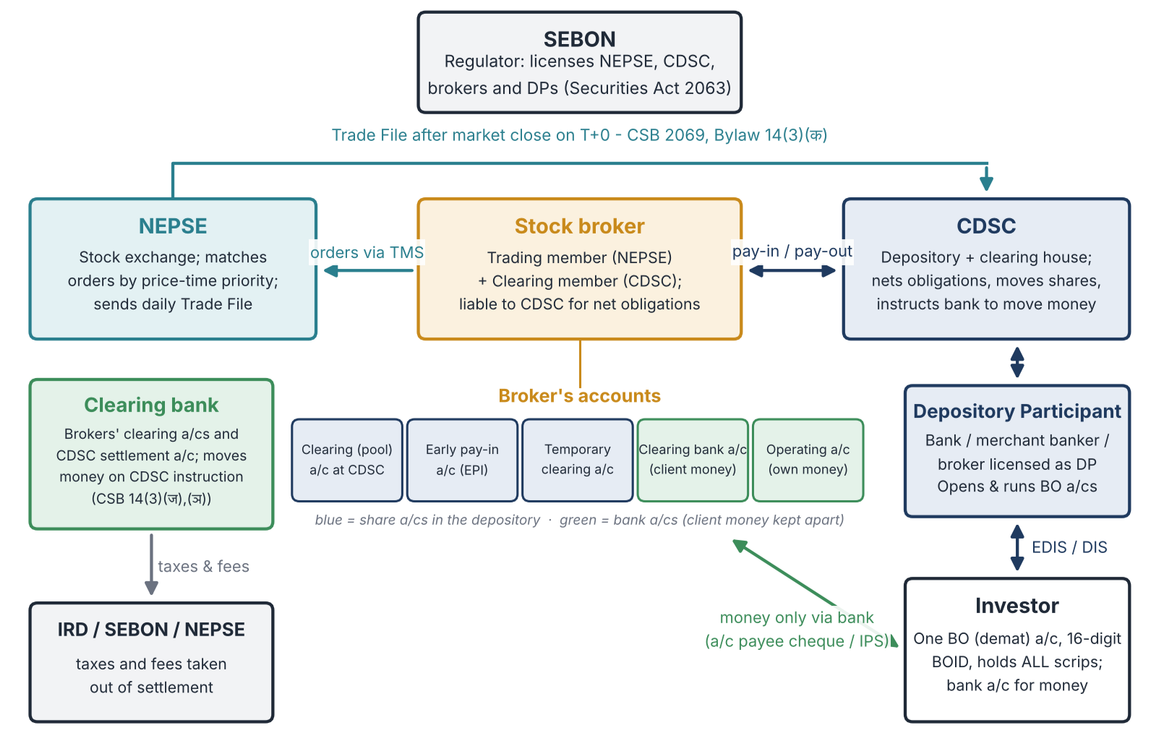
Three layers move a trade from order to ownership. NEPSE only matches orders. CDSC is both the central depository, which keeps the legal record of who owns which shares, and the clearing house, which works out who owes what to whom. Banks hold the money. Brokers stand between investors and NEPSE/CDSC, and Depository Participants (DPs) stand between investors and CDSC’s register of ownership.
1.1 The Beneficiary Owner (demat) account
| LAW CDS Regs 2067, Rule 2(ख) and 2(ग)2(ख) “हितग्राही” भन्नाले निक्षेप सदस्य मार्फत केन्द्रीय निक्षेप कम्पनीमा धितोपत्र वा उपकरण निक्षेप गर्न हितग्राही खाता खोलेका तथा विद्युतीय माध्यममा निक्षेप गर्न मिल्ने धितोपत्र वा उपकरण ग्रहण गरेका व्यक्ति सम्झनुपर्छ ।2(ग) “हितग्राही खाता” भन्नाले हितग्राहीले धितोपत्र निक्षेप गर्न निक्षेप सदस्यमार्फत केन्द्रीय निक्षेप कम्पनीसंग बेग्लै खाता नम्बरबाट खोलेको विद्युतीय खाता (डिम्याट एकाउन्ट) सम्झनुपर्छ । |
A Beneficiary Owner (BO) account is the investor’s own electronic securities account. It is opened through a DP but recorded at CDSC under a unique 16-digit number, the BOID: the first eight digits identify the DP and the last eight the client. Every security the investor owns sits in this single account, whether shares, debentures or mutual fund units. Bonus and right shares are credited to it, and pledges and freezes are recorded against it.
The account belongs to the investor, not to any issuing company. Issuers have no account relationship with investors. Each issuer admits its securities to CDSC under an agreement with CDSC (CDS Regs Rule 24), and CDSC then records against every BOID how many units of each admitted security that BOID holds. So an investor with 100 shares of company A and 100 shares of company B holds both in the same BO account, at whichever DP they chose. When company A declares a bonus, it takes the register of holders from CDSC as of the book-closure date, and the bonus shares are credited to each holder’s existing BO account.
1.2 The Depository Participant
| LAW CDS Regs 2067, Rule 2(झ) and Rule 122(झ) “निक्षेप सदस्य” भन्नाले केन्द्रीय निक्षेप कम्पनीसंग सदस्यता लिएका धितोपत्र व्यवसायी वा संगठित संस्था सम्झनुपर्छ । 12(क)–(ख) (क) हितग्राहीसँग सम्झौता गरेपछि मात्र धितोपत्र खाता खोल्ने, (ख) हितग्राही खाता खोल्नुभन्दा अगाडि बोर्ड/केन्द्रीय निक्षेप कम्पनीले निर्धारण गरेबमोजिमको लगानीकर्ता पहिचान प्रकृया पूरा गर्ने । 12(च) हितग्राहीको खाताबाट धितोपत्रको हस्तान्तरण गर्दा हितग्राहीको लिखित वा विद्युतीय सूचना प्राप्त गरेपछि मात्र कार्यान्वयन गर्ने । |
A DP is comparable to CDSC’s front office. It carries out KYC, signs the account agreement and opens the BO account. It also converts paper certificates into demat form, executes instruction slips to debit or credit accounts, records pledges and freezes, and issues statements. Its duties are listed in CDS Regs Rule 12 and its prohibitions in Rule 13. Under Rule 20, a DP must be a bank or financial institution, a stockbroker, a registrar and transfer agent, a custodian or another Board-approved body, with the minimum net worth and a clean credit record. Typical DPs are the merchant-banking subsidiaries of commercial banks (for example Nabil Investment Banking, NIC Asia Capital, Global IME Capital, Sanima Capital, NMB Capital and Siddhartha Capital), commercial banks themselves, and stockbrokers that hold a DP licence.
| WHY THIS EXISTS · Why many DPs rather than a single CDSC counter Reach: banks and brokers have branches across the country, while CDSC operates from one office. Identity and AML checks: documents and signatures are checked locally by the DP. The DP is accountable for them under Rule 12 and can be disciplined by CDSC under Rule 39. Paper-based work: dematerialisation of physical certificates, pledges for loans and transmission on death all need a counter that handles documents and lenders. Competition and redundancy: fees and service quality vary between DPs, and a failure at one DP does not halt the market. The ownership record itself is never spread out. It stays in one place, at CDSC. Only the service layer is distributed. |
1.3 Brokers, DPs and who carries settlement obligations
Settlement obligations exist only between CDSC and each clearing member (राफसाफ सदस्य), and the clearing member is the broker. CDSC computes, per clearing member, the net securities and net money that member must deliver or receive (CSB 14(3)(च)).
A DP has no settlement position of its own. It takes part in a trade at two points only: when the seller’s DP debits the seller’s BO account on the seller’s instruction, and when the buyer’s DP credits the buyer’s BO account on the buying broker’s instruction. Netting, the securities pay-in and the funds pay-in all happen between brokers and CDSC, never between the buyer’s DP and the seller’s DP. The settlement money never passes through a DP at all. One company may hold both a broker licence and a DP licence, but the two roles stay legally separate.
| LAW CDS Bylaws 2068, Bylaw 20(5) निक्षेप सदस्यले प्रत्येक हितग्राहीको नाममा छुट्टा छुट्टै खाता खोली प्रत्येक खाताको छुट्टा छुट्टै व्यवस्थापन गर्नु पर्नेछ र प्रत्येक हितग्राहीको धितोपत्रलाई अन्य हितग्राही वा निक्षेप सदस्य वा आफ्नै धितोपत्रसँग नमिसाई राख्ने व्यवस्था गर्नु पर्नेछ । |
| WHY THIS EXISTS · Why brokers don’t hold client shares Nepal follows a direct-holding model. Each investor’s shares are recorded in the investor’s own BO account and kept apart from other clients’ shares and from the DP’s own holdings. A broker therefore has no pool of client shares that it could pledge, lend or lose in its own insolvency. If a broker fails, its clients’ shares are still in their own BO accounts. The only shares a broker ever holds are those in transit through its clearing (pool) account during settlement. |
2. The cycle at a glance
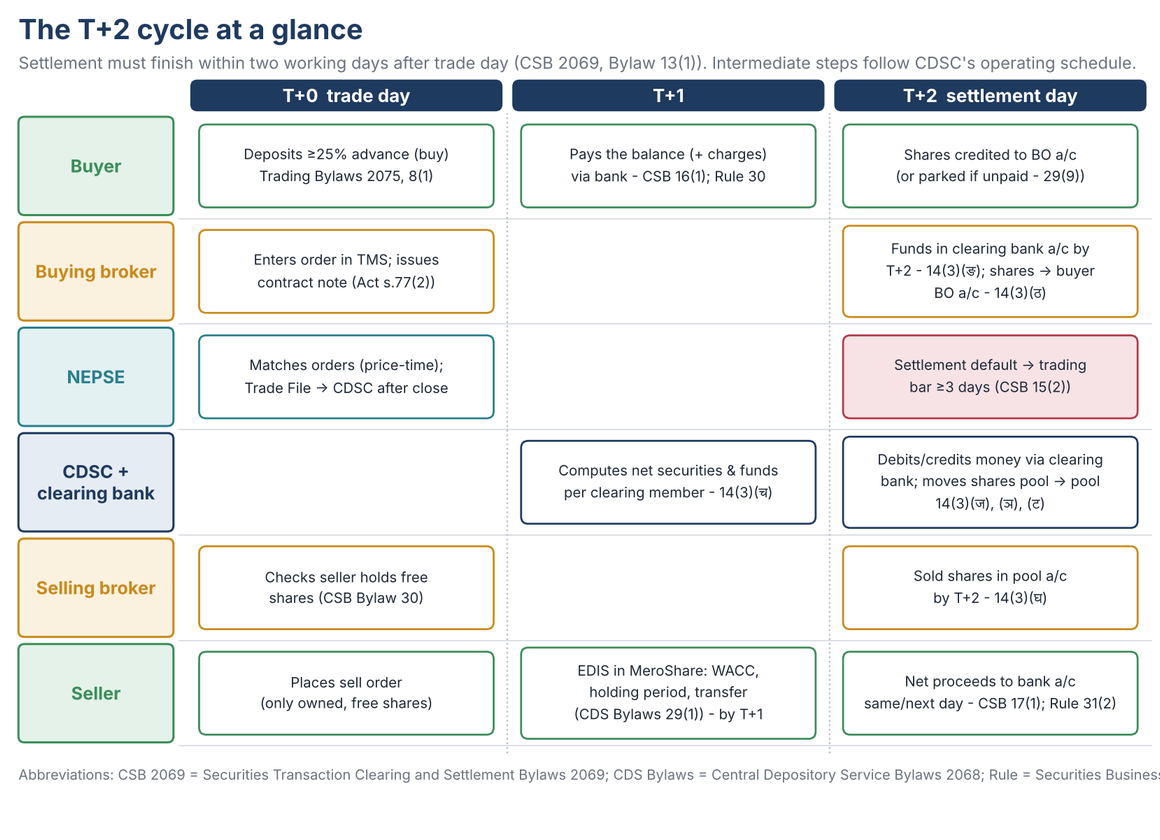
| LAW CSB 2069, Bylaw 13(1) राफसाफ सदस्यले धितोपत्रको राफसाफ तथा फछ्र्यौट कार्य कारोबार भएको दिन बाहेक २ (दुई) कार्य दिन (T+2) भित्र गर्नु पर्नेछ। |
The law fixes only the outer limit: everything must be completed within two working days after the trade day. CDSC sets the operating times for each settlement activity under Bylaw 13(2). Under CDSC’s schedule, the clearing computation and the seller’s electronic delivery instruction (EDIS) fall on T+1, and the brokers’ pay-ins and CDSC’s pay-outs fall on T+2.
3. Phase 1: Trade day (T+0)
Step 1. KYC, demat account and client agreement
Before the first order, the investor needs three things. The first is a BO account with a DP. The second is a trading account with a broker, which means completing KYC and signing a trading agreement. The third is a bank account. The broker must record the client’s details before trading (Broker Regs Rule 29), and SEBON may prescribe what the client agreement contains (Rule 33(2)).
| LAW Securities Act 2063, Section 77(1) धितोपत्र व्यवसायीले धितोपत्र कारोबार गर्नु अघि सम्बन्धित लगानीकर्ताको परिचय लिने, ग्राहक खाता खोल्ने, रकम लेनदेन गर्ने तथा कारोबार सम्बन्धी सम्झौता गर्ने सम्बन्धी व्यवस्था तोकिए बमोजिम हुनेछ। |
| LAW Trading Bylaws 2075, Bylaw 10(1) ग्राहकको लागि धितोपत्रको कारोबार गर्न कारोबार सदस्यले धितोपत्र व्यवसायी (धितोपत्र दलाल, धितोपत्र व्यापारी तथा बजार निर्माता) नियमावली, २०६४ बमोजिमको ग्राहक पहिचान प्राप्त गरी ग्राहकसंग कारोबार सम्झौता गर्नु पर्नेछ। |
Step 2. Buyer’s advance and the segregated clearing account
For a buy order the broker must collect at least 25% of the estimated order value in advance. This advance, and every other amount the client pays for trading, goes into the broker’s separate bank account at the clearing bank designated by NEPSE, and that account may be used only for clearing and settling securities transactions. Client money never goes to the broker’s own operating account. The only money that ever moves from the clearing account to the operating account is the broker’s own earned commission, after settlement (Step 17).
| LAW Trading Bylaws 2075, Bylaw 8(1) कारोबार सदस्यले खरिद आदेश प्राप्त गर्दा सो आदेश कार्यान्वयन हुँदा कायम हुने अनुमानित रकमको कम्तीमा पच्चीस प्रतिशत रकम सम्बन्धित आदेश दिने ग्राहकबाट अग्रिम रूपमा लिनु पर्नेछ। |
| LAW Trading Bylaws 2075, Bylaw 18(1)–(4)18(1) कारोबार सदस्यले धितोपत्र कारोवारका लागि नेप्सेबाट तोकिएको राफसाफ बैंकमा अलग्गै खाता खोली धितोपत्र सम्बन्धी कारोवार गर्नु/गराउनु पर्नेछ। 18(2) कारोबार सदस्यले लगानीकर्ता तथा अन्य धितोपत्र व्यवसायीबाट कारोबार बापत प्राप्त हुने रकम कारोवार शुरू हुनु पूर्व बैंक दाखिला गर्नु पर्नेछ। 18(3) कारोवार सदस्यले लगानीकर्ता वा अन्य धितोपत्र व्यवसायीलाई कारोबार बापतको भुक्तानी एकाउन्ट पेयी चेक मार्फत गर्नु पर्नेछ। 18(4) कारोबार सदस्यले उपविनियम (१) बमोजिम खोलिएको खातालाई धितोपत्र कारोबार राफसाफ बाहेक अन्य प्रयोजनका लागि प्रयोग गर्न पाइने छैन। |
| LAW Securities Act 2063, Section 78(2)धितोपत्र व्यवसायीले उपदफा (१) बमोजिम राखेको हिसाब तथा अभिलेखबाट प्रष्ट रुपमा अलग देखिने गरी धितोपत्र खरिद गर्न चाहने आफ्नो ग्राहकले धितोपत्र खरीद बिक्री गर्नका लागि बुझाएको रकम तथा धितोपत्रको हिसाब र अभिलेख तोकिए बमोजिम बेग्लै राख्नु पर्नेछ। |
| LAW Broker Regs 2064, Rules 30 and 31(1), (3)30 धितोपत्र दलालले ग्राहकसंग धितोपत्र सम्बन्धी कारोबार गर्दा बैंक मार्फत मात्र रकम लेनदेन गर्नु पर्नेछ।31(1) धितोपत्र दलालले कुनै ग्राहकको रकम, धितोपत्र तथा कागजात आफ्नो लागि वा अन्य ग्राहकको लागि प्रयोग गर्न पाउने छैन।31(3) धितोपत्र दलालले प्रत्येक ग्राहकको धितोपत्र कारोबार संग सम्बन्धित प्रमाणपत्र तथा रकमको हिसाब स्पष्ट देखिने गरी छुट्टाछुट्टी अभिलेख राख्नुपर्नेछ। |
| LAW Listing Regs 2075, Rule 20(2) and 20(4)20(2) धितोपत्र दलालले धितोपत्र कारोबारका लागि सम्बन्धित धितोपत्र बजार वा राफसाफ गर्ने संस्थाले तोकिदिएको बैंकमा खाता खोल्नु पर्नेछ।20(4) यस नियममा अन्यत्र जुनसुकै कुरा लेखिएको भए तापनि धितोपत्र दलालले कारोबारका लागि प्रयोग गर्ने खाता कारोबारसँग सम्बन्धित प्रयोजन बाहेक अन्य प्रयोजनका लागि प्रयोग गर्न पाइने छैन । |
How the clearing account is organised: Collateral sits in the clearing account whether or not an order is ever placed against it. The clearing bank keeps one account per broker (Trading Bylaw 18(1)), not a sub-account for each client. Which client owns which part of the balance is shown in the broker’s own books, through the client-wise ledgers required by Broker Regs Rule 31(3) and Act Section 78(2). The balance of the clearing account must always be at least the total of what the broker owes its clients, and NEPSE’s supervision and SEBON’s inspections test exactly this. Every rupee in and out moves through banking channels (Broker Regs Rule 30; Listing Regs Rule 20(1), (3)). That includes returning an unused advance at the client’s request, which the client agreement governs.
| IN PRACTICE · Use and misuse of the 25% advance Some brokers accept the advance as a cheque that is never honoured, which lets an investor buy up to four times what they have actually paid in the T+0 day, but the rest 75% is to be settled within T+1. NEPSE has directed brokers not to accept buy orders beyond a client’s actual collateral.SEBON’s policy direction since 2025 is to move to full pre-funding and regularize the leveraged buys through formal margin trading channels. Under that approach the trading, demat and bank accounts are linked, and a purchase completes only once the investor’s funds are confirmed. Until the Trading Bylaws are amended, Bylaw 8(1)’s 25% remains the legal minimum. |
Step 3. Seller: no selling what you don’t own
| LAW CSB 2069, Bylaw 30 मौज्दातमा धितोपत्र नभई राफसाफ तथा फछ्र्यौट गर्न नहुने : बिक्रीकर्ता राफसाफ सदस्यले ग्राहकको नामबाट धितोपत्र बिक्री गर्दा खातामा मौज्दात नभएको धितोपत्रको कारोबार गर्नु हुँदैन। |
Naked short selling is prohibited. The legal duty rests on the selling clearing member (i.e. Seller’s Broker): it must not sell for a client any securities that are not in that client’s account. Sellers do not post a cash advance. Instead they must hold a free balance: units that are pledged, frozen or locked in cannot be delivered, so the seller should check the free balance in MeroShare before selling.
The ownership record, including pledges and freezes, lives in CDSC’s depository, not in the broker’s Trade Management System (TMS). The holdings a TMS shows are a copy taken from that record. Order matching is kept separate from the depository so that it can run at speed and keep working if the depository is unavailable. For that reason the law does not rely on the trading screen to stop an invalid sale. The binding check happens when the seller’s DP processes the delivery instruction and must confirm that the units are there and free (CDS Bylaws 29(3), Step 8).
This has a consequence when the same holding is sold through two brokers. If an investor with 1,000 shares sells all 1,000 through broker A and again through broker B, both brokers may accept the order because each sees 1,000 shares. A version of this happened in August 2020, when NEPSE’s online system let some investors sell the same shares more than once. Only one EDIS can succeed. The other trade fails delivery and is closed out, and the selling clearing member pays an additional 20% of the closed-out value (CSB 20(1), 21(2)). The broker recovers that amount from its client and may report the client to CDSC (CSB 23(1)). The 20% close-out cost is what makes double-selling uneconomic.
Step 4. Order entry and automatic matching
| LAW Trading Bylaws 2075, Bylaws 3(2) and 9(2)3(2) कारोबार प्रणालीमा प्रविष्टी भएका आदेशहरु मूल्य समय प्राथमिकता (Price Time Priority) को आधारमा स्वचालित रुपमा कारोबार हुनेछ। 9(2) सदस्यले आदेश प्रविष्ट गर्दा पहिले प्राप्त गरेको आदेशलाई पहिला प्रविष्ट गर्नु पर्नेछ। |
Orders are matched automatically by price, then time. Listing Regs Rules 12–14 govern the trading system, purchase and sale orders, and the receipt of orders. Under the fourth amendment to the Trading Bylaws (in force from Baisakh 2083), orders may be queued before the session opens. The opening session accepts prices within ±5% of the previous close, and the daily range for a scrip is ±15%. An index move of 5% in the first two hours, or of 8% at any time, halts trading or closes the market.
Step 5. Contract note
| LAW Securities Act 2063, Section 77(2) कुनै पनि धितोपत्र व्यवसायीले धितोपत्र खरीद, बिक्री वा विनिमय सम्बन्धी करार गरेपछि अर्को दिनको बजार बन्द हुनु अगावै करार नोट बनाउनु पर्नेछ र त्यस्तो नोटमा सो धितोपत्र व्यवसायीले एजेण्टको रुपमा करार गरेको भए करार नोटको सक्कल प्रति सम्बन्धित ग्राहकलाई दिनु पर्नेछ… |
The contract note must be issued before the market closes on the next trading day. This is usually intimated by the broker to the buyer/seller through email and is accessible through the TMS portal as well. Section 77(3) prescribes its contents: the type of business, the parties, the date, a description and the quantity of the securities, the unit price, the consideration and the charges. NEPSE’s format for trade information is set by Trading Bylaws 19 and Schedule 2.
Step 6. NEPSE sends the Trade File to CDSC
| LAW CSB 2069, Bylaw 14(3)(क) नेप्सेले हरेक दिनको कारोबार समय समाप्त भए पश्चात् सो दिन भएको धितोपत्रको कारोबारको विवरण (Trade File) सिडिएससिलाई उपलब्ध गराउनेछ। |
After the market closes on T+0, NEPSE, not the broker, sends CDSC the complete Trade File of the day’s executed trades. Brokers do not submit transaction summaries to CDSC. A broker’s role at CDSC begins with its pay-in obligations.
4. Phase 2: Clearing and pre-settlement (T+1)
Step 7. CDSC computes each clearing member’s net obligations
| LAW CSB 2069, Bylaws 11(1), 14(1)(ग) and 14(3)(ख), (ग), (च)11(1) नेप्सेमा कारोबार सम्पन्न भएका धितोपत्रको राफसाफ तथा फछ्र्यौट सिडिएससिले गर्नेछ ।14(1)(ग) [सिडिएससिले धितोपत्र कारोबारको देहायका कुनै एक वा एक भन्दा बढी प्रक्रिया अवलम्बन गरी राफसाफ…] नेटिङ्ग प्रणालीको आधारमा ।14(3)(ख) हरेक राफसाफ सदस्यले राफसाफ तथा फछ्र्यौट कार्यको लागि सिडिएससिमा धितोपत्रको पुल खाता …14(3)(ग) हरेक राफसाफ सदस्यको राफसाफ तथा फछ्र्यौट कार्यको लागि विनियम १२ बमोजिमको राफसाफ बैंक…14(3)(च) सिडिएससिले नेप्सेबाट प्राप्त कारोबारको विवरणको आधारमा हरेक राफसाफ सदस्यले कारोबार वापत बुझाउनु पर्ने धितोपत्र तथा रकम तथा बुझाएको धितोपत्र तथा रकमको गणना गर्नेछ। |
| LAW Listing Regs 2075, Rule 28(1)धितोपत्र कारोबारको राफसाफ गर्दा नेटिङ्ग प्रणाली मार्फत गर्न सकिनेछ। |
Bylaw 14(1) allows CDSC to settle trade-to-trade, for physical or demat securities, or on a netting basis. Bylaw 14(3) lays down the procedure for dematerialised securities clause by clause. Clauses (ख) and (ग) set up the two accounts every clearing member must have: a securities pool account at CDSC and a clearing account at the clearing bank. Under clause (च), CDSC ingests NEPSE’s Trade File and computes, for each clearing member, the securities and funds it must deliver and receive. The detailed mechanics are in CDSC’s Demat Securities Clearing and Settlement Procedures.
| WHY THIS EXISTS · Why settle on a net basisA broker may buy 10,000 shares of one scrip for some clients and sell 8,000 for others on the same day. Under netting it delivers or receives only the difference of 2,000 shares, and pays or receives only the net money. Netting cuts the number of transfers and the liquidity each broker needs, and lets CDSC settle the whole market in a single cycle. |
Step 8. Seller authorises delivery (EDIS or DIS)
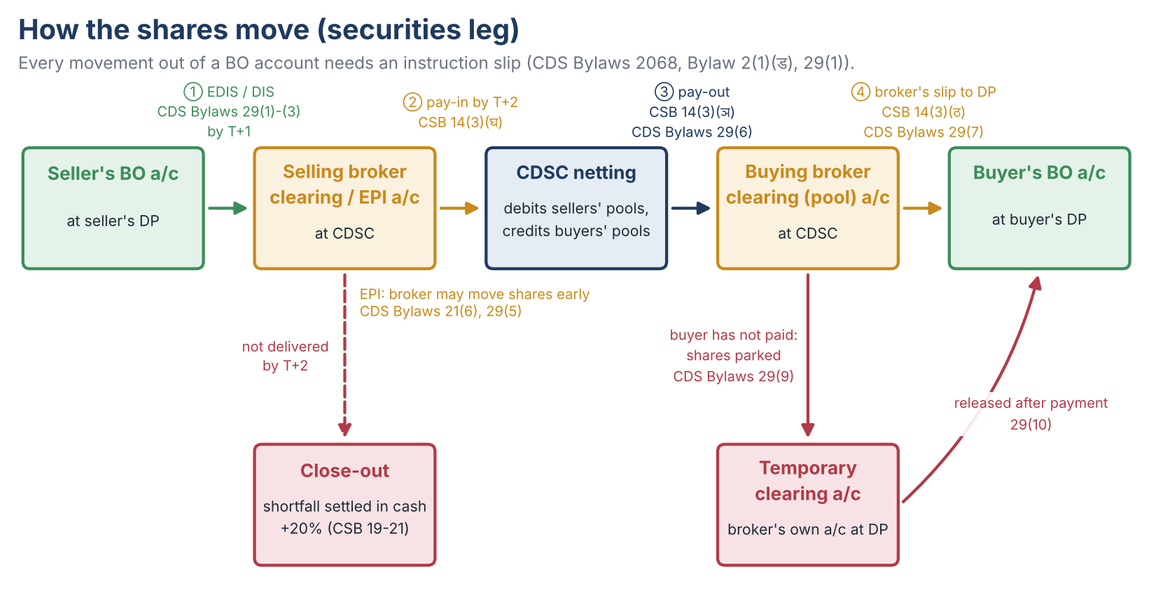
Once a sale is executed, the seller must instruct their DP to move the sold units out of the BO account into the selling broker’s clearing (pool) account, or into its early pay-in account. The instruction is given online through MeroShare EDIS, or on a paper instruction slip in the format of Schedule 23 to the CDS Bylaws.
| LAW CDS Bylaws 2068, Bylaw 2(1)(ड)“निर्देशन पुर्जी” भन्नाले सिडिएससिमा खाता खोलेका व्यक्ति वा संस्थाले आफ्नो खातामा धितोपत्र जम्मा गर्न (क्रेडिट) वा आफ्नो खाताबाट धितोपत्र घटाउन (डेबिट) दिईने आदेशलाई सम्झनु पर्छ । |
| LAW CDS Bylaws 2068, Bylaw 29(1), (2), (3), (5)29(1) धितोपत्र बजारमा भएको कारोबारको राफसाफ प्रयोजनका लागि हितग्राहीले आफ्नो खाताबाट धितोपत्र दलालको राफसाफ खातामा वा पूर्व भुक्तान खाता वा धितोपत्र दलालको राफसाफ खाता मार्फत सिडिएससिमा धितोपत्र जम्मा गर्नका लागि अनुसूची-२३ बमोजिमको ढाँचामा सम्बन्धित निक्षेप सदस्यलाई निर्देशन पुर्जी जारी गर्नु पर्नेछ । सम्बन्धित हितग्राहीले यस प्रयोजनको लागि विद्युतीय रुपमा पनि अनुरोध गर्न सक्नेछ ।29(2) निक्षेप सदस्यले उपविनियम (१) बमोजिम प्राप्त निर्देशन पुर्जीको आवश्यक जाँचबुझ गरी निर्देशन पुर्जीमा उल्लेख भए बमोजिमको आदेश केन्द्रीय निक्षेप प्रणालीमा प्रविष्टी गरी सम्बन्धित धितोपत्र दलालको राफसाफ खाता वा पूर्व भुक्तान खाता वा सिडिएससिको राफसाफ खातामा जम्मा गर्नुपर्नेछ ।29(3) निक्षेप सदस्यले उपविनियम (२) बमोजिम आदेश प्रविष्टि गर्नु अघि उक्त हितग्राहीको खातामा आवश्यक धितोपत्रको मौज्दात रहेको यकिन गर्नु पर्नेछ ।29(5) उपविनियम (४) मा जुनसुकै कुरा लेखिएको भए तापनि धितोपत्र दलालले अनुसूची-२३ बमोजिमको ढाँचामा निर्देशन पुर्जी जारी गरी राफसाफ प्रयोजनका लागि प्राप्त धितोपत्र निर्धारित समय अगावै राफसाफ खाताबाट घटाई पूर्व भुक्तान खातामा जम्मा गर्न सक्नेछ। |
| LAW CDS Bylaws 2068, Bylaw 21(6) सिडिएससिले राफसाफ प्रयोजनका लागि प्रत्येक धितोपत्र दलाल, बजार निर्माताका लागि पूर्व भुक्तान खाता (Early Pay-in Account) खोलिदिन सक्नेछ । |
Why a separate delivery instruction is needed after a valid sell order
- An order is a contract to sell; the instruction slip transfers title. The order creates an obligation on the exchange. The shares move only when their owner instructs the depository (CDS Bylaws 2(1)(ड) and 29(1)).
- The broker has no power to debit a client’s BO account. The owner pushes the shares out by instruction, and the DP may act only on the owner’s written or electronic instruction (CDS Regs Rule 12(च)). This keeps a broker from pulling shares a client never agreed to sell.
- The DP confirms the units exist and are free before debiting them (CDS Regs 29(3)). Pledged, frozen and locked-in units are stopped at this point.
- It ties the shares to a specific settlement. Where an investor has sell trades through more than one broker, the instruction allocates the shares to one of them.
- It fixes the tax base. Before transferring, the seller confirms the cost and holding period that capital gains tax is computed on.
| IN PRACTICE · What the seller does in MeroShare My Purchase Source: select the acquisition lots (secondary purchase, IPO, bonus, right and so on), confirm or enter their cost, and calculate the weighted average cost (WACC). Cost is pre-filled for electronic secondary purchases; older and bonus lots may need manual entry. Holding period: classifies the gain as held for 365 days or less, or for more than 365 days, which sets the CGT rate. My EDIS / Transfer Shares: shows the settlement ID, contract number, scrip and quantity; confirming generates the electronic Schedule 23 instruction.EDIS is due by T+1, so the broker can complete its securities pay-in by T+2. Missing it exposes the seller to close-out at 20%. Under Bylaw 29(5), a broker that receives shares early may move them to its early pay-in account ahead of the deadline. |
Step 9. Buyer pays the balance
| LAW CSB 2069, Bylaw 16(1)–(3)16(1) राफसाफ सदस्यले आफूले खरिद गरेको धितोपत्र वापतको खरिद मुल्य, सो मा लाग्ने बोर्ड दस्तुर, नेप्से कमिशन, राफसाफ सदस्यको कमिशन आदि ग्राहकबाट लिनु पर्नेछ।16(2) उपविनियम (१) अनुसार रकम प्राप्त गरे पश्चात् सो को निस्सा ग्राहकलाई दिनु पर्नेछ ।16(3) राफसाफ सदस्यले ग्राहकबाट अग्रिम रकम प्राप्त गरेको भए सो समेत खुलाई निस्सा जारी गर्नु पर्नेछ … |
The buyer pays the remaining purchase price together with the Board fee, NEPSE commission and the broker’s commission. The broker issues a receipt that shows any advance already received. Payment must go through the banking system, by connectIPS, another interbank transfer or an account payee cheque, into the broker’s clearing bank account (Broker Regs Rule 30; Listing Regs Rule 20(1), (3); Trading Bylaws 18(2)–(3)). The law fixes the broker’s deadline, which is the funds pay-in within T+2 (Step 12). The client’s own deadline, usually T+1 or the morning of T+2, is set by the broker in the client agreement so that the broker can meet its own.
5. Phase 3: Settlement day (T+2)
Step 10. The T+2 deadline
CSB Bylaw 13(1) sets the outer limit (Section 2), and Bylaw 13(2) lets CDSC fix the operating times for settlement work within it. A clearing member that misses the deadline is barred from trading under Bylaw 15 (Section 6D), and its undelivered securities are closed out under Bylaws 19–21 (Section 6A).
Step 11. Securities pay-in by the selling broker
| LAW CSB 2069, Bylaw 14(3)(घ) बिक्रीकर्ता राफसाफ सदस्यले आफूले बिक्री गरेको धितोपत्र कारोबार सम्पन्न भएको दुई कार्य दिन (T+2) भित्र आफ्नो पुल एकाउण्टमा जम्मा गर्नु पर्नेछ। |
The selling broker must have every share it sold in its pool account at CDSC within T+2. This is the broker’s obligation to CDSC, not a settlement between the buyer’s DP and the seller’s DP. The shares reach the pool account from the seller’s BO account through the seller’s DP (Step 8). From the pool account, CDSC’s netting moves them to the buying brokers’ pool accounts (Step 14), and from there they go to the buyers’ BO accounts (Step 15). The DPs only make the account entries at either end.
Step 12. Funds pay-in by the buying broker
| LAW CSB 2069, Bylaw 14(3)(ङ) खरिदकर्ता राफसाफ सदस्यले आफूले खरिद गरेको धितोपत्र वापतको रकम कारोबार सम्पन्न भएको दुई कार्य दिन (T+2) भित्र खण्ड (ग) बमोजिमको बैंकमा रहेको आफ्नो राफसाफ खातामा जम्मा गर्नु पर्नेछ। |
The buying broker must hold the full net amount it owes in its clearing account at the clearing bank, the account set up under clause (ग), within T+2. DPs play no part in moving settlement money. This is the broker’s own obligation, and it applies whether or not the broker’s client has paid (Section 6B).
Step 13. CDSC settles funds through the clearing bank
| LAW CSB 2069, Bylaw 14(3)(छ), (ज), (झ), (ञ), (ट)(छ) खण्ड (च) बमोजिम गणना गर्दा कुनै सदस्यले जम्मा गर्नुपर्ने धितोपत्र तथा रकम जम्मा नगरेको वा कम ज…(ज) खण्ड (च) बमोजिम हरेक राफसाफ सदस्यले कारोबार वापत बुझाउनु पर्ने कर दस्तुर शुल्क समेत गणना गरी राफसाफ सदस्यको खाताबाट आफ्नो खातामा रकमान्तर गराउन सिडिएससिले राफसाफ बैंकलाई निर्देशन दिनेछ।(झ) खण्ड (ज) बमोजिम निर्देशन गर्दा कुनै सदस्यको खातामा रकम पर्याप्त नभएको पाइएमा उक्त जानकारी राफ…(ञ) खण्ड (क) देखि खण्ड (झ) सम्मको प्रक्रिया सम्पन्न भए पश्चात् सिडिएससिले खरिदकर्ताको हकमा हरेक खरिदकर्ता राफसाफ सदस्यले प्राप्त गर्नुपर्ने धितोपत्रको गणना गरी उक्त सदस्यको धितोपत्रको पुल एकाउण्टमा जम्मा गरी दिनेछ … बिक्रीकर्ताको हकमा हरेक बिक्रीकर्ता राफसाफ सदस्यले प्राप्त गर्नुपर्ने रकम गणना गरी राफसाफ बैंकमा रहेको पुल एकाउण्टबाट रकमान्तर गरी राफसाफ सदस्यको राफसाफ खातामा जम्मा गराउन राफसाफ बैंकलाई निर्देशन दिनेछ।(ट) खण्ड (ञ) बमोजिम रकमान्तर गरी रकम प्रदान गर्दा राफसाफ सदस्य ग्राहकले बुझाउनु पर्ने कर शुल्क दस्तुर आदि कट्टा गरेर मात्र रकम प्रदान गरिनेछ। |
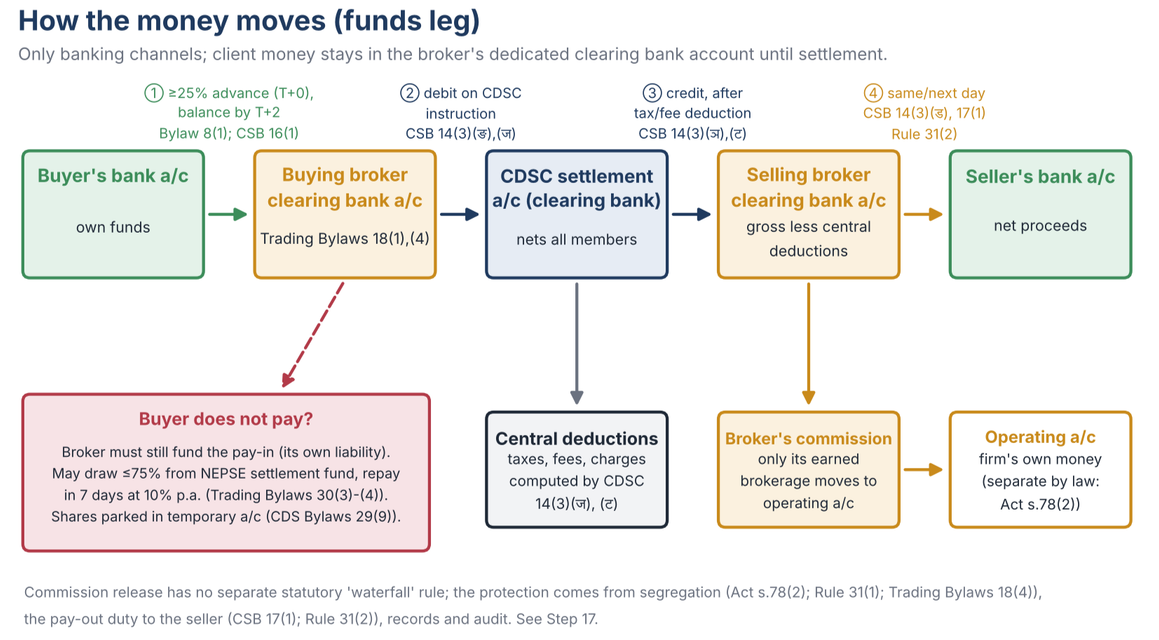
Funds settlement runs in this order:
- CDSC computes each member’s dues, including taxes, fees and charges (clause (ज)).
- It instructs the clearing bank to debit each buying member’s clearing account into CDSC’s settlement account (clause (ज)).
- Any member that has not deposited the required securities or funds, or whose account is short, is flagged (clauses (छ) and (झ)).
- Once clauses (क) to (झ) are complete, CDSC credits the securities due to buying members’ pool accounts and instructs the bank to credit the money due to selling members’ clearing accounts (clause (ञ)).
- Before any money is credited to a member, taxes, fees and charges are deducted (clause (ट)).
Fees and taxes are taken at source
Because of clauses (ज) and (ट), regulatory and exchange charges are deducted centrally, at clearing level, before money reaches the selling broker. The broker receives an amount already reduced by those items and does not pay them separately to CDSC or NEPSE out of its own account. CSB Bylaw 17(1) then sets out, at client level, the deductions taken from the seller’s gross proceeds: the Board (SEBON) fee, NEPSE commission, capital gains tax and the broker’s own commission. The seller’s statement shows all of these, but part of them has already been withheld centrally before the broker pays the seller.
Step 14. CDSC pays out the securities
| LAW CDS Bylaws 2068, Bylaw 29(6) धितोपत्र कारोबारको राफसाफ सम्पन्न भए पश्चात् सिडिएससिले राफसाफका लागि खोलिएका खातामा रहेका धितोपत्रहरु… |
Under CSB 14(3)(ञ), CDSC debits the selling brokers’ pool accounts and credits each buying broker’s pool account with the net securities due to it. Bylaw 29(6) of the CDS Bylaws provides for the transfer of securities out of the settlement accounts once settlement is complete.
Step 15. Buying broker credits the buyer’s BO account
| LAW CSB 2069, Bylaw 14(3)(ठ); CDS Bylaws 2068, Bylaw 29(7)CSB 14(3)(ठ) खण्ड (ञ) बमोजिम खरिदकर्ता राफसाफ सदस्यले प्राप्त गरेको धितोपत्र आफ्नो धितोपत्रको पुल एकाउण्टबाट ग्राहकको खातामा हस्तान्तरण गर्नु पर्नेछ।CDS 29(7) उपविनियम (६) बमोजिम खरिदकर्ता धितोपत्र दलालको राफसाफ खातामा प्राप्त धितोपत्रहरु सम्बन्धित खरिदकर्ता हितग्राहीको खातामा जम्मा गर्नका लागि अनुसूची-२३ बमोजिमको ढाँचामा सम्बन्धित निक्षेप सदस्यलाई निर्देशन पुर्जी जारी गर्नुपर्नेछ। |
The buying broker gives its DP an instruction slip to move the shares from its clearing account into the buyer’s BO account. This mirrors the seller’s EDIS. If the buyer has not paid in full, the shares go to the broker’s temporary clearing account instead (Section 6B).
Step 16. Pay-out to the seller
| LAW CSB 2069, Bylaws 14(3)(ड), 17(1), 17(2)14(3)(ड) खण्ड (ञ) बमोजिम बिक्रीकर्ता राफसाफ सदस्यले प्राप्त गरेको रकम आफ्नो राफसाफ खाताबाट ग्राहकको खातामा जम्मा गरिदिनु पर्नेछ। 17(1) राफसाफ सदस्यले आफूले बिक्री गरेको धितोपत्र वापतको बिक्री रकमबाट बोर्ड दस्तुर, नेप्से कमिशन, पूँजीगत लाभकर र आफ्नो कमिशन घटाएर आउने रकम बिक्रीकर्ता ग्राहकलाई सिडिएससिले राफसाफ सदस्यको खातामा जम्मा गरी दिए पश्चात् यथाशीघ्र दिनु पर्नेछ। 17(2) उपविनियम (१) बमोजिम राफसाफ सदस्यले ग्राहकलाई भुक्तानी नदिएको खण्डमा विनियम ३३ का… |
| LAW Broker Regs 2064, Rule 31(2)धितोपत्र दलालले धितोपत्र कारोबार गरेपछि प्राप्त गरेको रकम, धितोपत्र वा कागजात त्यसरी प्राप्त गरेकै दिन वा भोलिपल्टसम्म सम्बन्धित पक्षलाई बुझाउनु पर्नेछ। |
Bylaw 17(1) takes four items off the gross sale amount: the Board fee, NEPSE commission, capital gains tax and the broker’s own commission. The remainder (घटाएर आउने रकम) is what the broker must pay the seller, so the seller’s payout is the residual. It must be paid as soon as CDSC credits the broker, and at the latest the next day (Rule 31(2)). A broker that fails to pay faces action under Bylaw 33 (suspension of a clearing member), as Bylaw 17(2) provides.
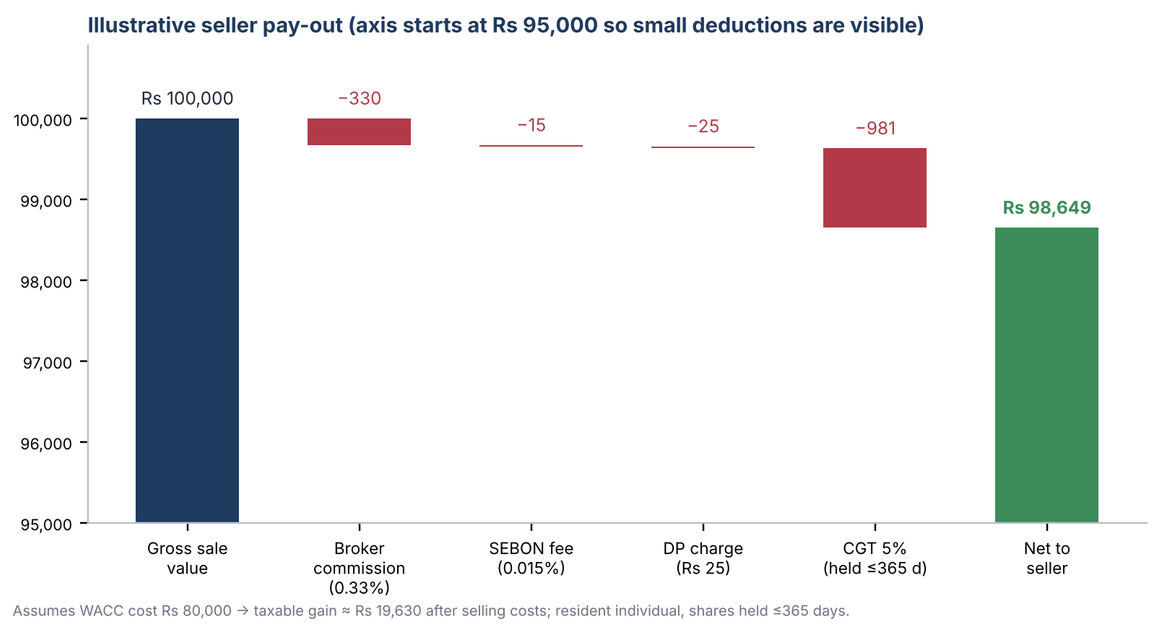
Figure 5. From gross sale value to the seller’s net receipt
| Charge | Basis | Recipient |
|---|---|---|
| Broker commission | Tiered rate under Broker Regs Rule 32(1) and Schedule 14; for equities, between about 0.24% and 0.36% of trade value | Broker, which passes 20% of it to NEPSE and 0.6% to SEBON |
| SEBON transaction fee | 0.015% of trade value (equities), charged on both sides | SEBON |
| DP charge | Rs 25 per scrip per transfer day | DP |
| Capital gains tax | Resident individuals: 5% if held 365 days or less, 3.75% if held longer, as a final tax on the gain computed from WACC (rates from 22 September 2026) | Government (IRD) |
Step 17. Broker moves its earned commission to its operating account
Bylaw 18(4) (Step 2) restricts the clearing account to clearing and settlement. The only money that may leave it for the broker’s own operating account is the broker’s earned commission, and only after every client entitlement is met.
No bylaw prescribes an order of release such as ‘commission last’. The commission still comes out last in substance, because four sets of rules work together:
- Central deduction: CDSC withholds taxes, fees and charges before the money reaches the broker (CSB 14(3)(ज), (ट)).
- Segregation: client money is kept apart and may not be used for the broker or for other clients (Act s.78(2); Broker Regs Rule 31(1); Trading Bylaws 18(4); Listing Regs 20(4)). A broker that takes its commission while a seller is still unpaid leaves the account short of client money, which is itself a breach.
- A hard payout deadline: the seller must be paid on the same or the next day (CSB 17(1); Rule 31(2)), on pain of action under CSB 17(2) and Bylaw 33.
- Records and audit: transaction records are kept for five years (Trading Bylaws 20), with client-wise ledgers (Rule 31(3)), NEPSE supervision (Trading Bylaws 25) and SEBON inspection and audit (Broker Regs Rules 34–36).
The broker initiates these transfers itself, but within limits the law sets, and the controls are enforced after the fact. Two kinds of payment from the clearing account work differently. Payments to investors and other securities businesspersons must be by account payee cheque (Trading Bylaws 18(3)) or by account-to-account transfer (Listing Regs 20(3)). Debits in favour of CDSC are made by the clearing bank on CDSC’s instruction, not by the broker’s cheque. Moving the broker’s commission to its operating account is not a payment to an investor; the purpose restriction in Bylaw 18(4) governs it.
| IN PRACTICE · Tighter segregation of client assetsSEBON’s Stock Broker Business Strengthening Policy, 2083 requires brokers to keep a separate client fund account and client securities account, apart from their institutional assets. This brings the books into line with the segregation the Act and Regulations already demand. |
6. When something fails
6A. Seller fails to deliver: close-out
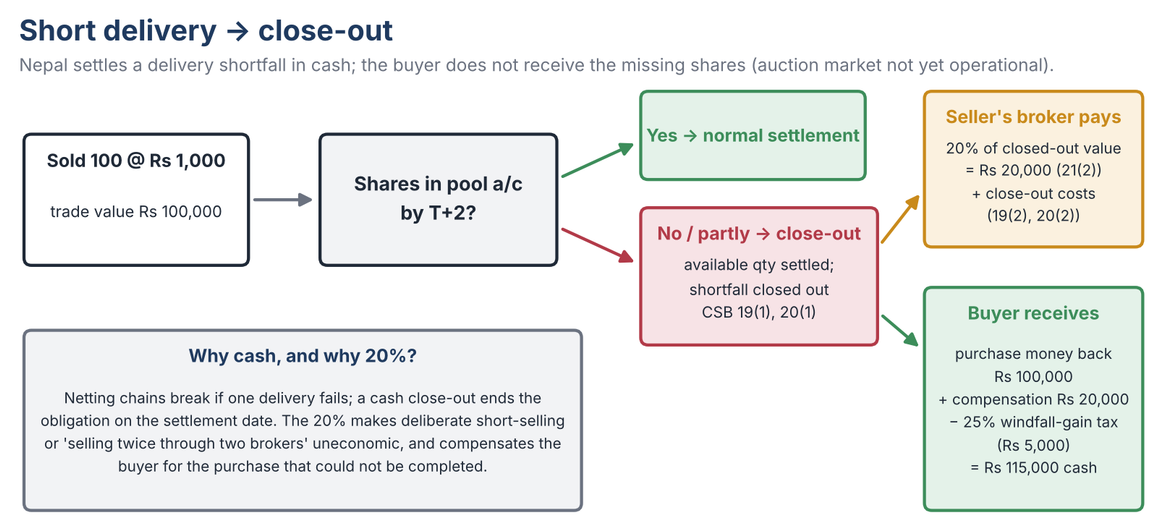
| LAW CSB 2069, Bylaw 2(ठ) and Bylaws 19, 20, 212(ठ) “क्लोज आउट” भन्नाले विनियम २० र २१ मा व्यवस्था भए अनुसार कारोबार राफसाफ तथा फछ्र्यौट हुन नसकेको अवस्थामा गरिने वित्तीय राफसाफ सम्झनु पर्छ । 19(1) राफसाफ सदस्यले कारोबार सम्पन्न भएको दिन बाहेक दुई कार्य दिन भित्र राफसाफ सम्बन्धी कार्य सम्पन्न नगरेमा बजारको आवश्यकता एवं प्रकृति हेरी सिडिएससिले क्लोज आउट गर्न सक्नेछ । 19(2) उपविनियम (१) अनुसार क्लोज आउट गर्दा लागेको सम्पूर्ण खर्च राफसाफ सदस्यको खाताबाट बेहोरिनेछ ।20(1) ग्राहकको खाताबाट धितोपत्र बिक्री गर्दा बिक्री गरिएको परिमाण भन्दा कम संख्यामा धितोपत्र उपलब्ध भएमा सो बराबरको धितोपत्र राफसाफ तथा फछ्र्यौट गरी नपुग संख्या बराबरको धितोपत्रको लागि सिडिएससिले क्लोज आउट गर्नेछ । 21(1) यस विनियमावली बमोजिम राफसाफ सदस्यले राफसाफ सम्बन्धी कार्य सम्पन्न नगरेको कारणबाट क्लोज… 21(2) उपविनियम (१) बमोजिम क्लोज आउट गर्दा राफसाफ सदस्यले क्लोज आउट भएको कारोबार मुल्यको बीस प्रतिशत रकम थप गरी सिडिएससिमा बुझाउनु पर्नेछ। |
What close-out means: A close-out is a financial settlement used when delivery cannot take place (CSB Rule 2(ठ)). When the T+2 pay-in deadline passes without the shares, the clearing system records the shortfall and settles that quantity in cash. No claim, complaint or court process is needed; it follows automatically from the missed pay-in. If the seller delivers only part of the quantity, the available shares are settled and only the shortfall is closed out (20(1)).
What the buyer receives: The buyer does not receive the missing shares. Some markets buy them in through an auction. The Trading Bylaws provide for an auction market (Bylaws 34–37), but it is not operational, so in Nepal the shortfall is settled in cash. The buyer is compensated as follows:
- The purchase money for the undelivered quantity is returned.
- The selling clearing member pays an additional 20% of the closed-out value (21(2)) and bears all costs of the close-out (19(2)).
- Of that 20%, a quarter is taken as windfall-gain tax and the rest goes to the buyer, so the buyer nets about 15% of the closed-out value.
| WORKED EXAMPLE · Close-out on a Rs 100,000 trade 100 shares sold at Rs 1,000; none delivered by T+2.Seller’s broker pays 20% = Rs 20,000, plus close-out costs, and recovers this from its client.Buyer receives the purchase money back (Rs 100,000) plus compensation of Rs 20,000, less 25% windfall-gain tax (Rs 5,000) = Rs 115,000. In FY 2025/26 investors paid Rs 99.47 million across 20,280 close-out cases, of which the government collected Rs 24.86 million as tax. |
| WHY THIS EXISTS · Why close out in cash, and why 20%Netting links every member’s obligations, so one failed delivery could stall the whole settlement. A cash close-out ends the failed obligation on settlement day and lets everything else settle. The 20% additional amount makes naked short-selling and double-selling uneconomic, puts the cost of failure on the party that caused it, and compensates the buyer for a purchase that could not be completed. |
6B. Buyer fails to pay: the temporary clearing account
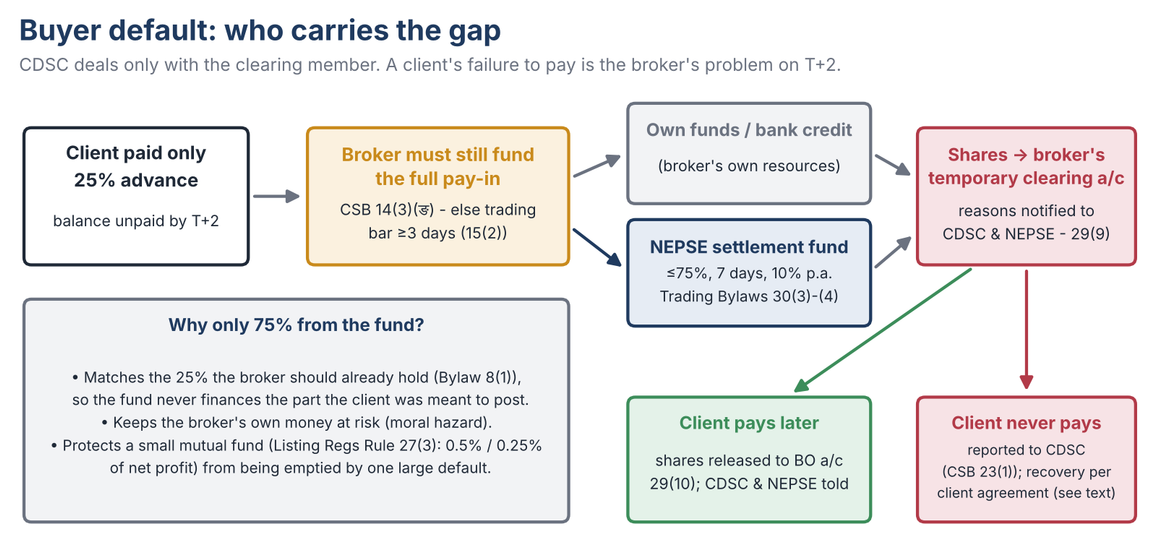
| LAW CDS Bylaws 2068, Bylaws 2(1)(थ), 21(3), 29(9)–(11)2(1)(थ) “अस्थायी राफसाफ खाता” भन्नाले कुनै कारणले राफसाफका लागि तोकिएको समयावधी भित्र राफसाफ हुन नसकेको अवस्थामा अस्थायीरुपमा धितोपत्र जम्मा गर्ने प्रयोजनको लागि निक्षेप सदस्यले धितोपत्र दलालका लागि राफसाफ खाता खोल्दा खोलिदिने छुट्टै खातालाई सम्झनु पर्छ । 21(3) राफसाफ खाता खोल्दा निक्षेप सदस्यले धितोपत्र दलाल, बजार निर्माताको लागि अस्थायी राफसाफ खाता समेत खोलिदिनु… 29(9) हितग्राहीले आफ्नो दायित्व पुरा नगरेको कारणबाट धितोपत्र दलालले उपविनियम (७) बमोजिम हितग्राहीको खातामा धितोपत्र जम्मा गर्न नसक्ने अवस्था आएमा त्यस्तो धितोपत्र उक्त दलालले आफ्नो निक्षेप सदस्यलाई निर्देशन पुर्जी जारी गरी आफ्नो अस्थायी राफसाफ खातामा जम्मा गर्नुपर्नेछ र सो गर्नुको कारण खुलाई सिडिएससि र धितोपत्र बजारलाई जानकारी दिनु पर्नेछ । 29(10) हितग्राहीले आफ्नो दायित्व पुरा गरे पश्चात् उपविनियम (९) बमोजिम धितोपत्र दलालले आफ्नो अस्थायी राफसाफ खातामा जम्मा गरेको धितोपत्र सम्बन्धित हितग्राहीलाई उपलब्ध गराई सो को जानकारी सिडिएससि र धितोपत्र बजारलाई दिनु पर्नेछ । 29(11) धितोपत्र दलालको राफसाफ खाता वा अस्थायी राफसाफ खातामा कुनै हितग्राहीले प्राप्त गर्नु पर्ने संस्थागत लाभ जम्मा हुन आएमा सम्बन्धित हितग्राहीको खातामा सो लाभ जम्मा गराउने जिम्मेवारी सम्बन्धित धितोपत्र दलालको हुनेछ र यसरी जम्मा गरेको सम्बन्धमा सिडिएससिलाइ जानकारी दिनु पर्नेछ । |
The broker carries the gap: CDSC deals only with the clearing member. If a client paid only the 25% advance and never pays the rest, the broker must still have the full net amount in its clearing account by T+2 (CSB 14(3)(ङ)), or it is barred from trading (15(2)). The broker funds the shortfall from its own resources, from bank credit or from the NEPSE settlement fund (Section 6C). The unpaid amount then sits in its books as a receivable from the client.
What the temporary clearing account does: Every broker has a temporary clearing account, opened by its DP together with its clearing account. It holds shares whose settlement to the client cannot be completed. If the buyer has not paid, the broker must not credit the buyer’s BO account. Instead it moves the shares into the temporary account by instruction slip and informs CDSC and NEPSE of the reason (CDS Bylaws 29(9)). This does three things:
- It prevents a defaulting buyer from selling unpaid shares through another broker.
- It makes every withholding visible to CDSC and NEPSE, because the reason must be given, so a broker cannot hold back a client’s shares unnoticed.
- It keeps the client’s corporate benefits, such as bonus shares and dividends, credited to the client (29(11)).
When the client pays, the broker releases the shares to the client’s BO account and informs CDSC and NEPSE (29(10)). The bylaws give the broker a right to withhold the shares and a duty to release them on payment. Any power to sell unpaid shares to recover the debt comes from the broker–client trading agreement, whose contents SEBON prescribes under Broker Regs Rule 33(2). The broker also reports the defaulting client to CDSC (CSB 23(1)), and CDSC circulates the client’s name to all other clearing members (23(2)).
| LAW CSB 2069, Bylaw 23(1)–(2)23(1) कुनै ग्राहकले राफसाफ सदस्यसँग राफसाफ गर्न नसकेमा राफसाफ सदस्यले सोको जानकारी सिडिएससिलाई गराउनु पर्नेछ ।23(2) उपविनियम (१) बमोजिम जानकारी प्राप्त भए पश्चात् सिडिएससिले त्यस्तो ग्राहकको सूची तयार गरी अन्य… |
| IN PRACTICE · Why brokers extend informal credit, and the margin regime replacing it Brokerage income depends on turnover, and active clients go to brokers who give them buying power.Many such clients sell within days, and the sale proceeds clear the receivable, so the broker earns commission on both legs.Brokers charge late-payment interest above their own cost of funds.The broker holds the 25% advance and the shares in its temporary account as cover, and sells them if the price falls. The Margin Trading Facility Directive, 2082 (in force from Falgun 1, 2082 / 13 February 2026) and NEPSE’s margin trading procedure move this lending into a regulated channel. They require at least 30% initial margin, a separate margin account, a margin settlement beneficiary account at CDSC, and lending limits tied to the broker’s net worth. |
6C. The settlement fund
| LAW Trading Bylaws 2075, Bylaw 30(3)–(4)कारोबार सदस्यले कारोबार रकमको अधिकतम पचहत्तर प्रतिशतसम्म कोषबाट रकम प्राप्त गर्न सक्नेछ । उपविनियम (१) बमोजिम कोषबाट प्राप्त रकम सात दिन भित्र बार्षिक दश प्रतिशतको दरले ब्याज सहित कारोबार सदस्यले फिर्ता गर्नु पर्नेछ। |
| LAW Trading Bylaws 2075, Bylaw 32(1)कारोबार सदस्यले देहायका कुनै कार्य गरे गराएमा कोषको दुरुपयोग गरेको मानिनेछ :- (क) कोषको नाममा धितोपत्र नामसारी गरिदिने, (ख) ग्राहकलाई लाभ पुर्याउन कोषबाट सापटी लिने, (ग) ग्राहकसँग लिएको रकम अन्य कारोबारमा प्रयोग गरी राफसाफका लागि कोषबाट रकम लिने । |
NEPSE’s settlement fund is governed by Trading Bylaws 26–33. A trading member facing a shortfall can draw up to 75% of the transaction value from the fund, repayable within seven days with interest at 10% a year (Bylaw 30). Misusing the fund (Bylaw 32) attracts an additional 10% charge under 32(2) and suspension for up to one month under 32(3). The fund is financed under Listing Regs Rule 27: the stock exchange, the clearing agency and brokers each contribute 0.5% of their net profit for the first five years and 0.25% after that. Separately, CSB Bylaw 46 provides for a settlement guarantee fund (फछ्र्यौट ग्यारेन्टी कोष) established by CDSC.
| WHY THIS EXISTS · Why the fund covers only 75%It mirrors the 25% advance. If the broker collected the advance that Bylaw 8(1) requires, a client default leaves at most 75% unpaid. The fund covers that gap and never finances the part the client was meant to post up front. It keeps the broker’s own money at risk. The broker therefore has every reason to enforce the advance and to check its clients’ credit. It protects the fund. The fund is built from small profit contributions, and full bailouts could drain it in a single large default. It is a bridge, not insurance. Seven days at 10% a year makes it short-term and deliberately costly. |
6D. Sanctions on the broker
| LAW CSB 2069, Bylaw 15(2)–(3)15(2) उपविनियम (१) बमोजिम राफसाफ सदस्यले राफसाफ तथा फछ्र्यौट कार्य सम्पन्न नगरेमा वा गलत कागजात तथा धितोपत्रको प्रमाणपत्र पेश गरेको पाइएमा कम्तीमा तीन कार्य दिनका लागि कारोबार गर्न गराउनबाट वञ्चित गरिनेछ।15(3) राफसाफ सदस्यलाई उपविनियम (२) बमोजिम कारोबार गर्नबाट वञ्चित गर्नुका साथै राफसाफको लागि गलत कागजात वा धितोपत्र बुझाएकोमा सही कागजात वा धितोपत्र नबुझाए सम्म र राफसाफको लागि बुझाउनु पर्ने रकम र धितोपत्र नबुझाएकोमा त्यस्तो रकम र धितोपत्र नबुझाए सम्म कारोबार गर्नबाट वञ्चित गरिनेछ । |
A clearing member that fails to settle is barred from trading for at least three working days, and the bar continues until the shortfall is made good. Further sanctions are available: CSB 32 (discipline and action) and 33 (suspension of a clearing member); Trading Bylaws 22(1)(च), under which NEPSE may suspend a member whose guarantee is insufficient; and 25(3), under which NEPSE may suspend a member immediately when supervision finds irregularities.
6E. CDSC may block settlement of manipulative trades
| LAW CSB 2069, Bylaw 26(1)–(2) (१) धितोपत्रको भित्री कारोबार, झुठो कारोबार, जालसाजी युक्त कारोबार गरेको लागेमा सिडिएससिले त्यस्तो कारोबारको राफसाफ तथा फछ्र्यौट गर्न निषेध गर्न सक्नेछ । (२) उपविनियम (१) बमोजिमको कुनै कारोबारको राफसाफ तथा फछ्र्यौट कार्य गर्न निषेध गरेमा सोको जानकारी बोर्ड तथा नेप्सेलाई दिनुपर्नेछ । |
7. Broker practices that lead to settlement failure
Most settlement failures trace back to a broker breaking the segregation and pre-funding rules above. The common patterns, the rule each one breaks and its consequence:
| Practice | Effect on settlement | Provision breached | Consequence |
|---|---|---|---|
| Using one client’s money for another client or for the firm | Clearing account is short at the T+2 funds pay-in | Act s.78(2); Broker Regs Rule 31(1); Trading Bylaws 18(4), 24(1)(ट) | Trading bar of at least 3 days (CSB 15(2)); action by NEPSE and SEBON |
| Accepting orders beyond the client’s collateral, or taking cheques without funds | Broker must fund a large client default itself | Trading Bylaws 8(1); NEPSE directive on orders beyond collateral | Suspension for insufficient guarantee (Trading Bylaws 22(1)(च)); settlement default |
| Trading without a client order, or selling shares the client does not hold | Client refuses EDIS and delivery fails | Trading Bylaws 24(1)(क); CSB 30 | Close-out with 20% additional amount (CSB 20–21); suspension |
| Submitting wrong documents, codes or certificates | CDSC rejects the pay-in | CSB 15(2)–(3); Trading Bylaws 24(1)(त) | Trading bar until corrected, at least 3 working days |
| Wash, circular or insider trades | CDSC may refuse to settle | CSB 26 | Settlement blocked; reported to SEBON and NEPSE |
| Misusing the settlement fund | Insolvency is hidden until the 75% cap or 7-day limit is hit | Trading Bylaws 32 | Additional 10%; suspension for up to one month |
| Delaying payment to sellers | Seller’s money is held back in the clearing account | CSB 17(1)–(2); Broker Regs Rule 31(2) | Action under CSB 33 |